

Men and Pet Loss: Breaking the Grief Stigma
You loved that dog with everything you had. You trained him, fed him, stayed up late when he was sick, and built your whole daily rhythm around him. And now he's gone, and you're sitting there wondering why it hurts this much, maybe even feeling a little embarrassed that it does. If that sounds familiar, you're not alone, and you don't need to carry this quietly. Men and pet loss is a topic that doesn't get nearly the attention it deserves, because so many men are silently grieving without the permission, language, or support to do it openly. That changes today.
Table of Contents
- Quick Takeaways
- Why Men Struggle to Grieve a Pet
- The Bond Is Real, and So Is the Grief
- How Grief Actually Shows Up in Men
- Practical Ways Men Can Move Through Pet Loss
- Comparing Grief Coping Styles: What Works and What Doesn't
- Men's Pet Memorial Gifts That Actually Help
- How to Support a Man Who Is Grieving a Pet
- Frequently Asked Questions
- References
Quick Takeaways
| Key Insight | Explanation |
|---|---|
| Men's pet grief is real and validated by research | Studies show that societal pressure to remain stoic makes pet loss especially hard for men to process openly, yet the grief itself is just as intense. |
| Pet grief is classified as "disenfranchised grief" | Society often fails to recognize pet loss as a legitimate reason to mourn, leaving grievers, especially men, without the support they deserve. |
| Men's grief shows up differently, not less deeply | Instead of tears, men may experience irritability, overactivity, emotional withdrawal, or physical symptoms like fatigue and poor sleep. |
| Action-based coping is a legitimate grief path | Creating a memorial, organizing a tribute, or choosing a meaningful keepsake are healthy, productive ways men naturally channel grief. |
| Suppressing grief prolongs it | Pushing pain down doesn't make it disappear. Unexpressed grief tends to intensify over time and can affect physical and mental health. |
| A physical memorial object provides ongoing comfort | Personalized keepsakes, like an engraved ring or a custom woven blanket, give men a tangible, private way to honor their pet and hold onto the bond. |
| Asking for support is a strength, not a weakness | Reaching out to a grief support group, a trusted friend, or a counselor is one of the most effective steps a man can take after losing a pet. |
Why Men Struggle to Grieve a Pet
There are two layers of stigma at work when a man loses a pet. The first is the broader social message that pet loss isn't a "serious" enough loss to grieve deeply. The second is the older, still-persistent expectation that men should be stoic, strong, and outwardly unfazed by emotional pain. When both layers hit at once, the result is a man who is quietly devastated but feels he has no right to say so.
Research consistently shows that societal pressure to remain stoic makes pet loss especially complicated for men. The stigma associated with openly grieving a loss can be compounding, even more so for males, according to published literature in counseling psychology. That's not a character flaw. That's a cultural weight most men have been carrying since childhood.
The "man up" message runs deep. It tells men that vulnerability is a liability, that expressing sadness is weakness, and that the appropriate response to pain is to get back to work. Applied to pet loss, this becomes: "It was just a dog. You'll be fine." But you're not fine, and that's completely okay.
Pro tip: If you find yourself dismissing your own grief with phrases like "I shouldn't feel this way," try replacing it with "Of course I feel this way. I loved him." That one small shift can open the door to genuine healing.

The Bond Is Real, and So Is the Grief
Let's be honest about something: the relationship between a man and his dog or cat is often one of the most uncomplicated, unconditional bonds in his life. Your pet never judged you, never needed you to perform or pretend. He was just there, steady and warm, at the end of every single day. That kind of bond leaves a real gap when it's gone.
Grief researchers have found that pet loss can be just as painful as losing a human loved one. There may even be a mismatch between how deeply a person feels the loss and what society expects them to express, and that gap, sometimes called disenfranchised grief, is what makes pet bereavement particularly isolating. People can even find themselves denying their own grief, feeling as though they "shouldn't" be this affected, because part of them has internalized the social message that pet grief is not legitimate.
When someone loses a pet, the grief they feel is real, valid, and worthy of the same compassion we'd extend to any other loss. The bond formed over years of daily life doesn't simply evaporate because the world doesn't always recognize it.
Research published in academic journals has found that over half of participants who experienced pet loss reported feeling as though society did not view it as an appropriate reason to grieve. Men, already navigating gender expectations around emotional expression, often feel this dismissal even more acutely.
The truth is this: if you built your mornings around that cat, if you talked to your dog on long drives, if you reorganized your vacations and your schedule and your entire life to include that animal, then losing them is losing a central relationship. Grief is the appropriate response.
How Grief Actually Shows Up in Men
One reason men so often feel confused by their own pet grief is that it doesn't always look like the crying-and-talking-about-it version of grief they see portrayed. Men's grief is frequently expressed differently, and that doesn't make it less real or less in need of care.
Common Signs of Grief in Men After Pet Loss
Men grieving a pet may experience overactivity, the urge to stay constantly busy so there's no moment of stillness in which the loss can land. They may feel intense irritability, snapping at people over small things, without connecting it to the grief underneath. Emotional withdrawal is also very common: pulling back from friends, family, or activities that once brought joy.
Physical symptoms are real too. Poor sleep, changes in appetite, fatigue, and even physical aches can all be the body's response to grief. Men are sometimes more likely to notice and mention physical symptoms before they'd ever say "I'm heartbroken."
The Anger and Emptiness Pattern
Research on how men process loss has found that common grief responses include emptiness, anger, and stoicism, sometimes cycling between all three. A man might feel a deep, hollow quiet at home, followed by a flash of anger at something unrelated, followed by forcing himself back into routine. This is grief doing its work, just in a less recognizable form.
Recognizing these signs in yourself is not weakness. It's honesty. And honesty is the first step toward healing.
Pro tip: If you notice yourself getting short-tempered or restless in the weeks after your pet's death, pause and ask yourself, "Is this grief?" Naming it, even privately, takes away some of its power to run your reactions without your knowing it.

Practical Ways Men Can Move Through Pet Loss
Moving through grief doesn't mean getting over it. It means finding a way to carry the love forward while slowly rebuilding your life around the space your pet left behind. There's no timeline. There's no right way. But there are paths that genuinely help.
Give Your Grief a Name and a Space
Men who are grieving a pet often do better when they can assign their grief to a specific, defined activity rather than being asked to simply "talk about their feelings." That might look like writing a brief letter to your pet, doing something in his honor, or creating a small memorial space at home. The action gives the emotion somewhere to go.
Stay Active, But Not to Escape
Physical movement genuinely helps with grief. Running, hiking, working with your hands, doing something your pet loved to do alongside you: all of these can be ways of processing emotion without having to verbalize everything. The distinction that matters is whether you're staying active to move through the grief, or staying busy to avoid it entirely. One heals. The other delays.
Let Yourself Be Supported
Reaching out is hard. We know that. But talking with a trusted friend, joining an online pet loss community, or even speaking with a counselor can dramatically reduce the isolation that makes men's grief so heavy. Research on men's bereavement shows that men need equality in grief support and recognition of their grief, just as much as anyone else. You don't have to earn the right to be comforted.
Create a Tangible Memorial
One of the most meaningful things you can do is create something lasting that honors your pet. A physical object, something you can see, hold, or keep, gives grief a home and keeps the bond alive in a real, present way. We'll talk more about this in the memorial gifts section below.
Comparing Grief Coping Styles: What Works and What Doesn't
| Coping Approach | What It Looks Like | Does It Help? |
|---|---|---|
| Suppression ("I'm fine") | Pushing pain down, refusing to acknowledge grief, staying relentlessly busy to avoid feeling the loss | No. Research shows that unexpressed grief tends to intensify over time and can surface as anger, physical symptoms, or delayed breakdown later on. |
| Active Meaning-Making | Creating a memorial, writing about your pet, doing something in their honor, choosing a personalized keepsake to keep them close | Yes. Channeling grief into purposeful action is a healthy and effective path, especially for men who process through doing rather than talking. |
| Connected Processing | Talking to someone you trust, joining a pet loss support group, or working with a grief counselor to voice what you're carrying | Yes. Having your grief witnessed and validated, even once, can significantly reduce the isolation that makes loss harder to bear. |
Men's Pet Memorial Gifts That Actually Help
There's a quiet power in having something physical to hold. When grief is invisible and internal, a tangible object that represents your pet, that carries their name, their face, or their paw print, brings the love out into the world in a way that feels solid and real. Men's pet memorial gifts work best when they're personal, meaningful, and made to last.
What Makes a Memorial Gift Meaningful for Men
The best memorial gifts for men are ones that don't feel performative or showy. They're things you keep close, in your home, on your hand, in your car, or wrapped around you on a hard night. They serve as a private acknowledgment of a bond that meant the world to you, without requiring you to explain yourself to anyone.
At The Soul Keep, every piece is designed with exactly that intention. Whether it's a custom woven blanket printed with your pet's photo, an engraved ring worn as a daily reminder of who you loved, or a personalized acrylic memorial that captures your pet's likeness with remarkable clarity, each item is crafted to serve as a real, lasting connection to your companion.
Specific Memorial Items Worth Considering
A custom memorial blanket is one of the most comforting options, especially for men who grieve privately at home. Seeing your dog's or cat's face woven into something warm and tactile is quietly powerful in a way that's hard to describe until you experience it. For men who want something they can carry every day, a personalized car ornament keeps your pet's memory present in the small moments, the commute, the early morning drive, the quiet times when you miss them most.
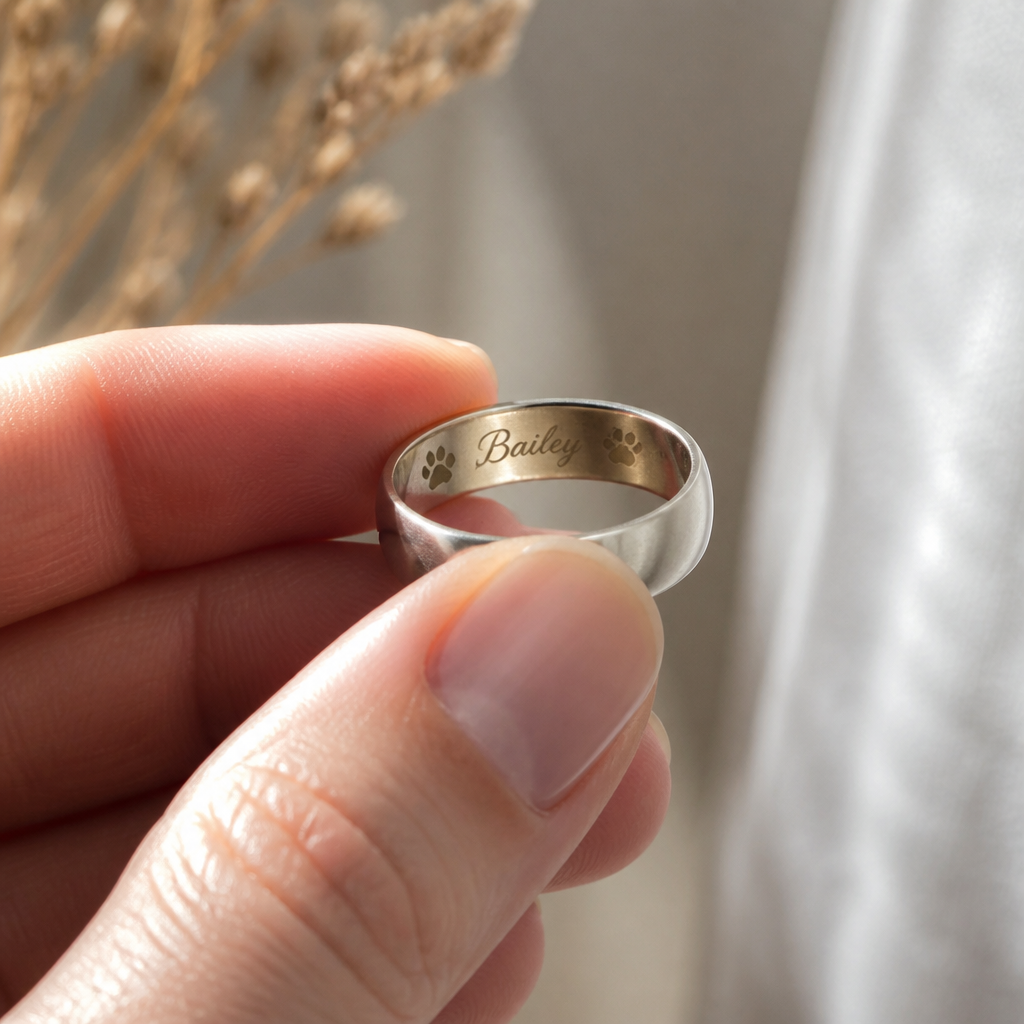
A custom ceramic mug with your pet's face on it turns an ordinary morning ritual into a small, private moment of remembrance. And for the man who wants to carry the bond closest of all, a personalized ring engraved with your pet's name or image is a dignified, understated way to say: this relationship mattered, and it always will.
Pro tip: When choosing a memorial gift for yourself or for a man who is grieving, look for something that fits naturally into daily life. A gift that gets used, worn, or seen every day does more healing work than something tucked away in a box.
How to Support a Man Who Is Grieving a Pet
If someone you care about, a partner, a friend, a brother, is grieving the loss of their dog or cat, the most valuable thing you can offer is simple: don't minimize it. "He was a good dog" is fine. "You'll get another one" is not. The loss of this specific pet, this personality, this presence, is what he's grieving, and no replacement fills that gap.
What to Say (and What to Skip)
The most helpful thing is often the least complicated. "I'm sorry. He was really special. I know you loved him." Full stop. No advice, no silver linings, no timelines. Grief counselors consistently recommend active listening over problem-solving, because when someone is grieving, they often don't need a solution. They need to feel heard.
If you want to do something concrete, consider a personalized pet memorial pillow or another meaningful keepsake that acknowledges the relationship. Giving a man something tangible that honors his pet, especially if you choose it thoughtfully, communicates something words sometimes can't: I know this mattered. I see your loss.
Give Him Time and Space Without Disappearing
Men who are grieving often need both space and presence at the same time. They may pull back socially, and that's normal. What helps is knowing that when they're ready to surface, the people they care about are still there. Check in without pressure. A simple "thinking of you, no need to respond" message carries more than you might expect.
Research on men's grief has found that grief can allow for a heartfelt connection with other people, and that being comforted by family, friends, or professionals can genuinely help, even when men initially resist reaching out. Be the person who makes that option feel safe and open, not demanded.
Frequently Asked Questions
Is it normal for men to grieve deeply over the loss of a dog or cat?
Absolutely. The grief a man feels after losing a pet is completely valid and often profound. Research in psychology confirms that pet loss can be as emotionally significant as losing a human loved one. The daily bond, the shared routine, the unconditional companionship: all of that is real, and losing it creates a real, measurable absence. Feeling that deeply doesn't make you weak. It means you loved well.
Why do men often hide their grief after losing a pet?
Two forces tend to work together here. First, social expectations around masculinity still push many men to appear stoic and unmoved by emotional pain. Second, pet loss is often treated as a lesser grief by society at large, leaving men doubly unsupported. The result is that many men feel they have no permission to grieve openly, so they grieve quietly and alone instead. Recognizing that both of these pressures are cultural, not personal, is an important first step.
How does grief in men look different from grief in women?
Men's grief often expresses itself through action, irritability, physical restlessness, or emotional withdrawal rather than through open crying or talking. This doesn't mean men feel less. It means the grief tends to move differently through the body and behavior. Overactivity, anger, and a hollow sense of emptiness at home are all common manifestations of grief in men, especially after a significant loss like a pet.
What are healthy ways for men to cope with pet loss?
Staying physically active, creating a meaningful tribute or memorial, talking to at least one trusted person about the loss, and giving yourself permission to feel what you actually feel are all healthy coping paths. Action-based grief processing works especially well for many men: building something, choosing a personalized keepsake, doing something in your pet's honor. The goal is to move through the grief, not around it.
What kind of pet memorial gift is appropriate for a man who has lost his dog or cat?
The best memorial gifts for men are personal, understated, and woven into daily life. A custom woven blanket with their pet's photo, an engraved memorial ring, a personalized ceramic mug, or a car ornament bearing their pet's likeness are all meaningful options. The key is choosing something that honors the specific pet and the specific bond, not something generic. Personalization is what turns a gift into a genuine act of comfort.
Is it okay to seek professional help for pet loss grief?
Yes, without question. A grief counselor or therapist who understands pet bereavement can provide real support, and reaching out for that help is a sign of self-awareness, not weakness. Pet loss support groups, both in-person and online, are also valuable. Grief that is witnessed and validated tends to resolve more gently than grief carried in silence.
How long does pet loss grief typically last for men?
There's no standard timeline, and comparing your grief to someone else's is rarely helpful. Some men find the sharpest pain eases within weeks. Others carry it for months or longer, especially after the loss of a long-term companion. What matters more than duration is direction: are you moving through the grief, finding small ways to honor the memory and rebuild your days, or are you stuck in suppression and avoidance? The former heals. The latter lingers.
We'd love to hear from you: if you've navigated pet loss as a man, or supported someone who has, what helped you most, and what do you wish more people understood about this kind of grief?
References
- Research on overcoming the social stigma of pet loss, with specific findings on how stigma affects males more acutely
- Psychology Today article examining how men mask grief due to societal pressure and the "man up" mentality
- Psychology Today article on why mourning a pet can be as painful as grieving a person, including the role of disenfranchised grief
- Peer-reviewed research on men's bereavement experiences, including how masculine norms disenfranchise men's grief
- Academic study on social norms, shame, and the experience of pet loss grief among men and women