

Pet Memory Book: A Step-by-Step Guide to Honor Your Pet
Losing a beloved pet leaves a silence that can feel impossible to fill. One of the most healing things you can do, whenever you feel ready, is to create a pet memory book: a tender, personal tribute that holds your companion's story right where it belongs, close to you. Studies suggest that a significant majority of pet owners experience real grief symptoms after a loss, and having something tangible to look through can be a quiet comfort on the hardest days. This step-by-step guide will walk you through the whole process, gently and at your own pace, so your pet's memory is never just a feeling that fades, but something you can hold in your hands.
Table of Contents
- Why a Pet Memory Book Helps
- Quick Takeaways
- Step 1: Gathering Your Materials
- Step 2: Collecting and Organizing Memories
- Step 3: Choosing Your Format and Structure
- Step 4: Building Your Book Page by Page
- Step 5: Adding Keepsakes and Mementos
- Memory Book Formats Compared
- Pairing Your Book with Other Memorial Keepsakes
- Frequently Asked Questions
- References
Why a Pet Memory Book Helps
Grief after losing a pet is real and deep. Research from the University of Michigan found that over 85% of pet owners experience at least one symptom of grief immediately after a pet's death. That number is not surprising to anyone who has loved an animal. The bond is genuine, and the absence is genuinely painful.
A pet memory book gives that grief somewhere to go. Rather than feeling scattered and overwhelmed by random objects around the house, the process of gathering photos and writing small captions channels your love into something purposeful. It transforms raw sadness into an act of honoring, and that shift matters.
The book also becomes a living resource. Years from now, you will be able to open it and remember the exact curl of your dog's tail, the specific spot your cat always claimed on the couch, or the way your rabbit greeted you every morning. Those details deserve to be kept safe.
"This book is for you." Three words on a first page can hold an entire lifetime of love. You do not need to wait until the words feel perfect. You just need to begin.
Quick Takeaways
| Key Insight | Explanation |
|---|---|
| Start with a dedication page | Opening your book with a heartfelt note to your pet sets a loving, personal tone for every page that follows. |
| Use acid-free materials | Acid-free paper and photo-safe adhesive prevent yellowing and deterioration, keeping photos and mementos intact for decades. |
| Organize before you assemble | Sorting photos chronologically or by theme before you start makes the layout process calmer and ensures you do not miss meaningful moments. |
| Captions matter as much as photos | Short written notes beside photos capture the small, specific details, like a head tilt or a favorite napping spot, that photographs alone cannot tell. |
| Include physical keepsakes where you can | A lock of fur, a collar tag, or a paw print pressed into a page transforms a photo album into a truly multisensory tribute. |
| There is no wrong pace | Some people complete their book in a weekend; others add to it slowly over months. Both approaches are completely valid. |
| The book pairs beautifully with physical keepsakes | A personalized blanket, engraved ring, or custom pillow alongside your memory book creates a full, comforting tribute space at home. |
Before you pick up a single photo or open a single album, give yourself permission to move slowly through this. There is no deadline here. This project belongs entirely to you and your pet.
Step 1: Gathering Your Materials
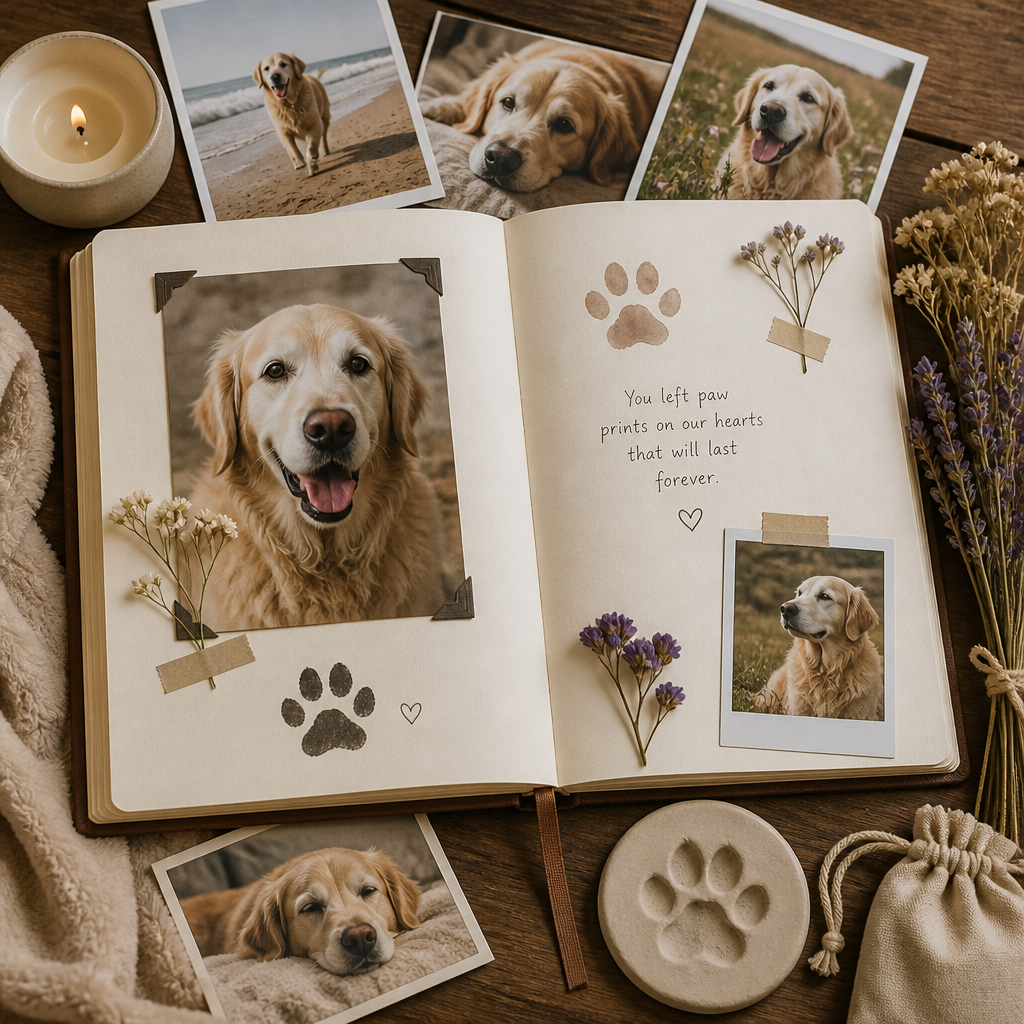
The good news is that you do not need anything fancy to start. A pet memory book can be as simple as a blank-paged scrapbook from a craft store or as curated as a hardcover photo book you design online. What matters most is choosing materials that will last.
Essential supplies for a handmade book
At minimum, you will want a sturdy scrapbook or photo album with acid-free pages, a photo-safe adhesive (glue sticks or double-sided tape both work well), pens or fine-tipped markers for captions, and any decorative elements that feel right, such as ribbons, washi tape, stickers, or pressed flowers. A hardcover binding is worth the small extra cost because this book will be handled often.
Acid-free materials are non-negotiable if you want the book to last. Regular paper and standard glue can cause photos to yellow or stick together over time. Spending a little more on the right supplies at the start protects every memory inside.
Optional but meaningful additions
Think about collecting small physical mementos as well: your pet's collar or tags, a lock of fur tied with a ribbon, a favorite toy token, or even a paw print. You do not have to include everything, but having these items ready before you sit down to assemble makes the process feel less overwhelming.
Pro tip: If you have your pet's vet records, keep the adoption or first-visit date handy. It makes a beautiful anchor for your book's first page and reminds you exactly when your life together began.
Step 2: Collecting and Organizing Memories
This is often the most emotional step, and that is completely okay. Gathering photos, scrolling through your camera roll, or digging out old printed pictures can bring tears and smiles in equal measure. Let both happen. This is how the book begins to take shape, not on paper yet, but in your heart.
Gathering photos from every source
Pull photos from your phone, social media, old printed albums, and any shared family folders. Do not edit too harshly at this stage. Collect generously first, then narrow down. You are looking for the full arc of your pet's life: the very first photo you took together, the everyday napping shots, the holiday costumes, the big adventures, and the quiet ordinary moments that now feel irreplaceable.
Sorting before you assemble
Once you have a pile (digital or physical), sort your photos before touching any adhesive. You can organize them chronologically, which gives the book a natural story arc from beginning to end. Or you can sort by theme, grouping photos by location, season, or mood. Either approach works; what matters is that organizing first means assembling later will feel calm and intentional rather than chaotic.
A common mistake is skipping this sorting step and gluing things down as you find them. The result is a book that feels scattered and misses important moments. Take the extra hour to sort. You will be grateful.
Step 3: Choosing Your Format and Structure
Your pet memory book can take many different forms. There is no single right answer, only the one that feels truest to your pet and most comforting to you. Here are the main paths people typically take.
A chronological structure tells your pet's life story from start to finish. It is the most narrative approach and works beautifully for pets you had for many years. A theme-based structure groups memories around recurring joys: seasons at the park, holiday traditions, favorite sleeping spots. This approach can feel lighter and more celebratory. A letter format weaves your own words throughout, writing directly to your pet as though you are speaking to them. Many people find this the most emotionally honest choice, because it allows feelings to sit alongside images.
You might also combine approaches, opening with a dedication letter, then moving into chronological chapters, and closing with a themed section of favorite moments. Your book, your rules.
Step 4: Building Your Book Page by Page
Now comes the part where the book actually comes to life. Take a breath. Open your materials. And begin.
Starting with the dedication page
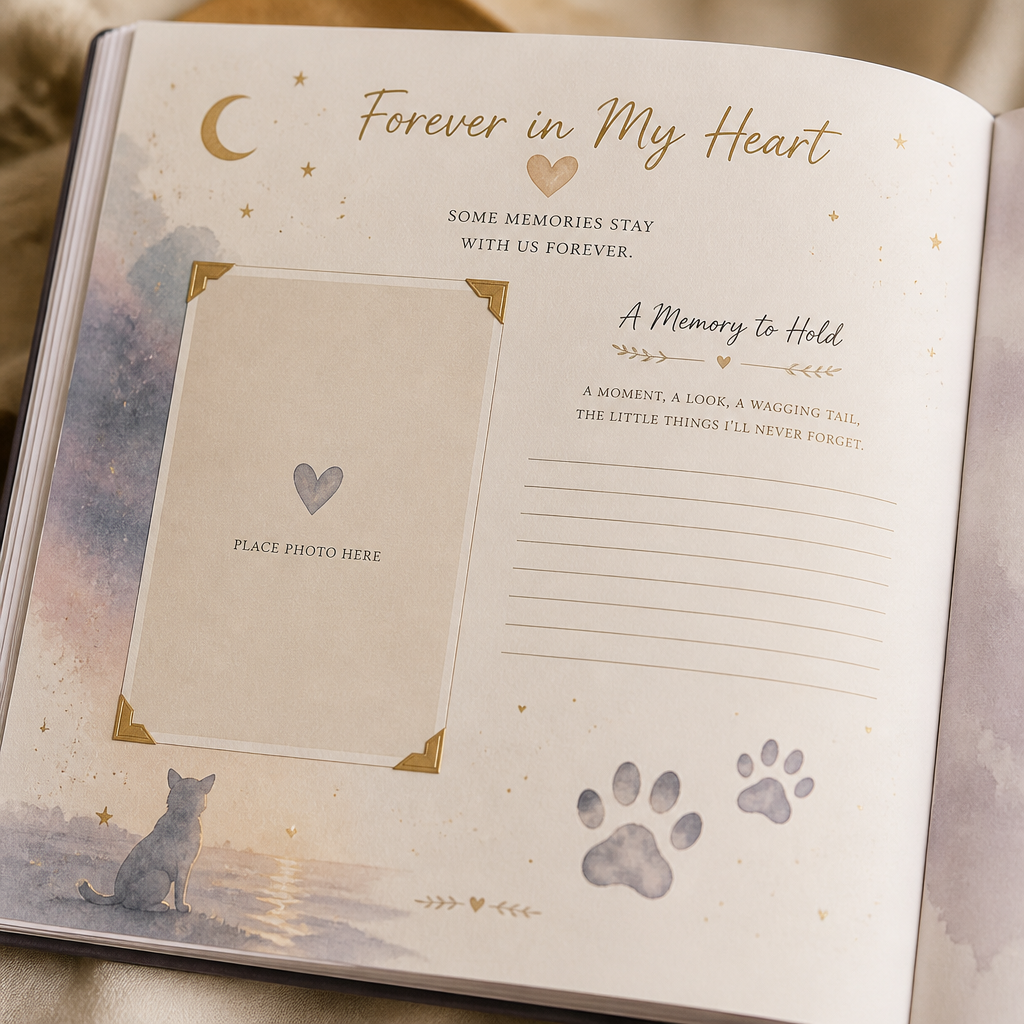
Your first page should be a dedication. Write a heartfelt note or a short letter to your pet. It does not have to be long or poetic. Something as simple as their name, their dates, and one sentence about who they were to you is enough. This page sets the emotional tone for everything that follows, and it is often the page people return to most.
Building the body of the book
Work through your sorted photos section by section. Place each photo, then write a caption or small note beside it. Captions are where the real depth lives. Rather than just writing a date and location, describe what was happening. What were you doing that day? What did your pet do that made you laugh? How did it feel to be in that moment with them? These are the details that photographs cannot show and that you most need to preserve.
Pro tip: If writing feels difficult at first, try writing your captions as though you are telling the story to a friend who never met your pet. That small shift in perspective often makes the words flow much more naturally.
Adding quotes, poems, and meaningful words
You can also incorporate short poems or quotes that resonate with your experience of your pet and your grief. Look for words that feel true to your relationship, not just generically comforting. If a line makes you cry because it is so exactly right, it belongs in the book.
Step 5: Adding Keepsakes and Mementos
A memory book becomes truly intimate when it holds more than photographs and words. Physical keepsakes bring another dimension of presence to the pages, something you can touch, not just see.
What to include as keepsakes
Consider attaching or tucking in: a favorite collar tag, a tiny piece of a beloved blanket, a lock of fur in a small envelope, a pressed flower from a place you walked together, or a paw print stamp. Even a printed receipt from the pet store where you used to shop together, or a ticket from a vet visit, can become deeply meaningful once it is placed with intention inside the book.
Use small envelopes, glassine pockets, or vellum envelopes to hold loose items safely without damaging the surrounding pages. These archival-friendly pockets keep delicate items protected while keeping them accessible.
Handling the emotional weight of this step
This step is often the most tender part of the whole process. Picking up your pet's collar or handling a lock of their fur can bring grief rushing back in a wave. That is not a sign to stop. It is a sign that this is working, that you are truly honoring the love you shared. Take breaks as often as you need. There is no rush.
Memory Book Formats Compared
Choosing a format before you start saves a lot of second-guessing later. Here is a quick comparison of the three most common approaches to help you decide which feels right for you and your pet's story.
| Format | Best For | Key Consideration |
|---|---|---|
| Handmade Scrapbook | Pet owners who want a tactile, creative process and the ability to include physical keepsakes like fur, tags, and pressed flowers | Requires acid-free materials and some craft supplies; most personal and unique result |
| Printed Photo Book (designed online) | Those who prefer a clean, polished look and have many digital photos to work with | Cannot include physical keepsakes; best paired with a separate keepsake box or memorial item |
| Handwritten Journal or Letter Book | Pet owners who process grief through writing and want their own voice at the center of the tribute | Works beautifully with or without photos; deeply personal but less visual in format |
Pairing Your Book with Other Memorial Keepsakes
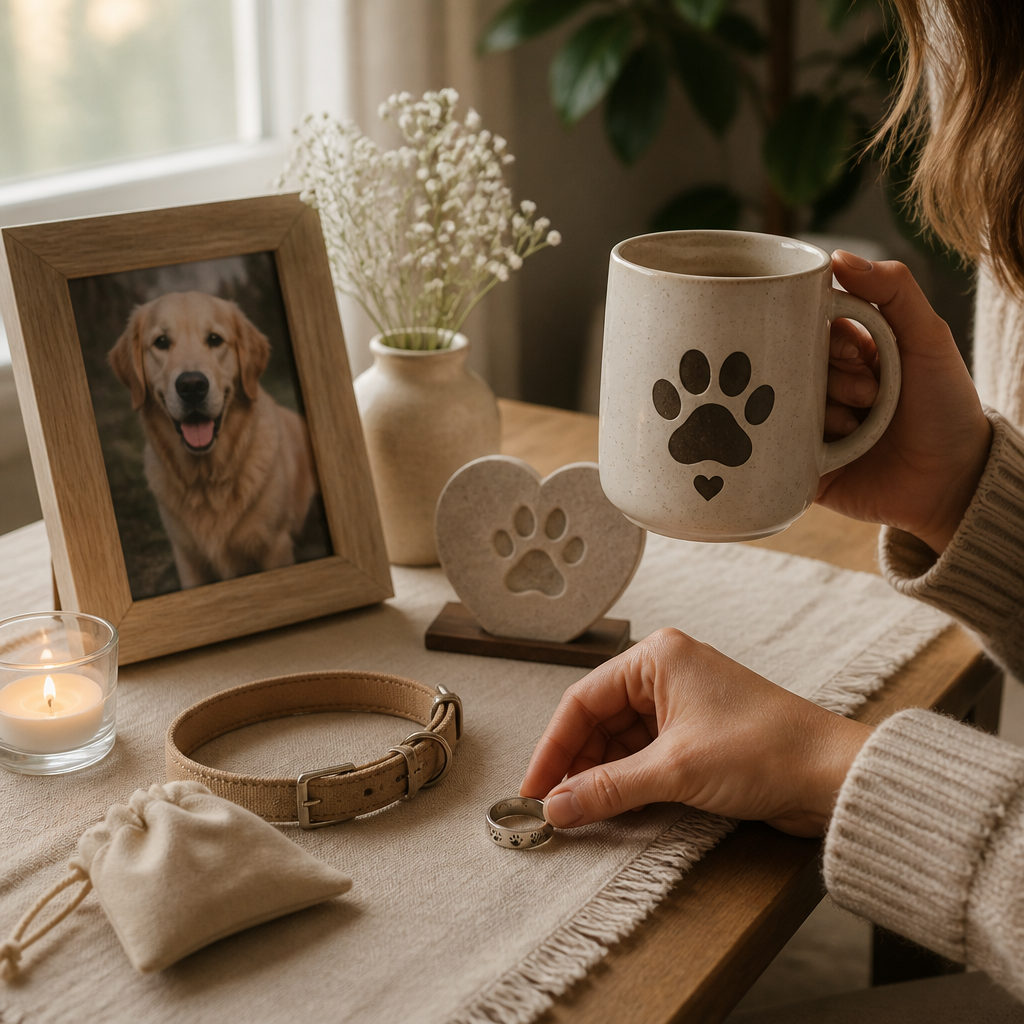
A pet memory book is a deeply meaningful tribute on its own. But many pet owners find that having a physical, wearable, or displayable keepsake alongside the book creates a fuller sense of comfort, something that can be with you even when the book is on the shelf.
At The Soul Keep, every product is crafted specifically for grieving pet owners who want that tangible connection. A personalized woven blanket featuring your pet's photo can sit on the couch where they used to sleep, transforming a painful reminder into a warm embrace. An acrylic memorial block can rest on your desk or bedside table, holding your pet's image in something solid and lasting. An engraved ring keeps them close even when you leave the house.
The most comforting memorial spaces tend to combine several forms: a memory book for quiet evenings, a blanket for daily comfort, and a displayed keepsake that greets you each morning. These layers of remembrance build something larger than any single item, a space where your pet's presence genuinely lives on.
Think of your memory book as the heart of your tribute, and your physical keepsakes as the surrounding warmth. Together, they create a home that still feels like it holds your pet.
Frequently Asked Questions
When is the right time to start a pet memory book?
There is no single right time, and you should not feel pressure to begin immediately after your loss. Some people find that starting the book within the first few weeks helps channel the intensity of fresh grief into something purposeful. Others need several months before they feel ready to sit with photos and memories. Both timelines are completely valid. Whenever you feel a gentle pull toward the project, that is your signal to begin.
What if I do not have many photos of my pet?
You do not need a large photo collection to create a meaningful memory book. A few precious images surrounded by handwritten stories, descriptions, and keepsakes can be just as powerful as a book filled with dozens of photos. You might also include drawings, printed online images of your pet's breed, or maps of places you used to visit together. The words and the love behind them are what truly bring a memory book to life.
Can children help create a pet memory book?
Absolutely, and it can be a beautiful part of their grieving process too. Invite children to draw pictures of the pet, write a short note, choose their favorite photos, or decorate a page with stickers. Participating in a memorial project gives children a way to express their grief actively rather than feeling helpless. Keep their contribution as its own special page, clearly labeled in their own handwriting if possible.
How do I preserve a pet memory book long-term?
Use acid-free paper and photo-safe adhesive throughout to prevent yellowing and deterioration. Store the completed book flat in a cool, dry location away from direct sunlight and humidity. Avoid plastic sleeves that are not labeled archival-safe, as some plastics emit gases that damage photos over time. If you have created a digital version, back it up in at least two separate locations, such as an external drive and a cloud service.
Is a handmade scrapbook better than a printed photo book?
Neither is objectively better. A handmade scrapbook allows you to include physical keepsakes like fur, collar tags, and pressed flowers, making it a deeply multisensory tribute. A printed photo book tends to look polished and professional, and is a good choice if you have many high-quality digital photos. In practice, many pet owners choose to do both: a printed photo book for clean visual storytelling, and a handmade scrapbook for the physical mementos that cannot be printed on a page.
What should I write on the dedication page?
Your dedication page does not need to be long or literary. Start with your pet's full name, their dates if you know them, and one sentence about who they were to you. You might write what they meant to your daily life, the specific thing they did that made you feel most loved, or simply a promise that you will always remember them. Write it as though you are speaking directly to your pet. That honest, direct voice tends to produce the most meaningful and personal tributes.
Can a pet memory book be a gift for someone who has lost a pet?
Yes, and it is one of the most thoughtful gifts you can offer. If you are making one as a gift, ask the person's close family members for photos they are willing to share, gather any stories you personally remember about the pet, and present the book in a quiet moment rather than a busy social setting. Pairing it with a soft personalized blanket or a small keepsake from The Soul Keep adds another layer of comfort to the gesture.
We would love to hear from you: have you created a pet memory book for a beloved companion, and what was the most meaningful thing you included?
References
- A guide to creating a pet memory book and photo album as a meaningful tribute
- Step-by-step instructions for building a pet memory book from scratch
- Research and overview on the psychological impact of animal loss and pet grief
- How to choose materials and build a lasting memory book for a lost loved one
- What to include in a pet memory box and why keepsakes support healing