

Dog Grief Support: Honor Your Beloved Companion
Losing a dog doesn't just feel like losing a pet. It feels like losing a family member, a daily routine, a source of unconditional love, and a piece of your own story. If you've found yourself staring at an empty dog bed, dreading the silence that used to be filled with paw steps on hardwood floors, you already know that dog grief support isn't a luxury. It's a necessity. Your pain is real, it is valid, and you are far from alone in feeling it. This guide is here to walk alongside you, gently, with honest answers, practical comfort, and a warm reminder that honoring your dog's memory is one of the most healing things you can do.
Table of Contents
- Quick Takeaways
- Why Dog Grief Is So Profound
- Understanding the Stages of Grief After Losing a Dog
- Practical Ways to Cope With the Loss of Your Dog
- Helping Children Grieve the Loss of a Dog
- Meaningful Ways to Honor Your Dog's Memory
- Grief Support Resources for Pet Owners
- Comparing Three Approaches to Dog Grief Support
- Frequently Asked Questions
- References
Quick Takeaways
| Key Insight | Explanation |
|---|---|
| Your grief is legitimate | Losing a dog triggers the same emotional responses as losing a human loved one. Don't let anyone minimize what you're feeling. |
| Grief is not a straight line | The stages of grief, denial, anger, bargaining, depression, and acceptance, don't follow a tidy order. You may cycle through them many times, and that's completely normal. |
| Guilt is one of the hardest parts | Feelings of guilt, especially after euthanasia decisions, are very common. A reality check often helps: most people find the outcome would have been the same either way. |
| Routines are your anchor | Keeping up familiar routines, even small ones like morning walks or evening quiet time, provides grounding during the disorienting early days of grief. |
| Physical keepsakes provide lasting comfort | Tangible memorials, such as personalized blankets, engraved rings, or acrylic portraits, create a physical connection to your dog that supports long-term healing. |
| Children need honest, gentle guidance | Shielding kids from the truth often backfires. Age-appropriate honesty, combined with a shared memorial ritual, helps children process grief in a healthy way. |
| Dedicated support is available | Multiple free pet loss hotlines and support groups exist in the US specifically for grieving pet owners. You do not have to navigate this alone. |
Why Dog Grief Is So Profound
There is a particular ache that comes with losing a dog, and it goes deeper than most people expect until they've lived it themselves. Dogs are woven into the fabric of daily life in ways that few relationships are. They greet you at the door. They share your mornings. They know your moods before you do. When that presence disappears, the absence is felt in every single room, every single hour.
For many pet owners, especially those who lived alone or relied on their dog for emotional support, the loss can be profoundly destabilizing. Research on pet bereavement consistently shows that grief after losing a dog mirrors the grief experienced after losing a human loved one, including symptoms like profound sadness, sleep disturbances, changes in appetite, difficulty concentrating, and even physical symptoms like fatigue and nausea.
And yet, pet grief is still frequently dismissed. Well-meaning friends say "it was just a dog." Workplaces don't offer bereavement leave for pet loss. That gap between the depth of what you're feeling and the support that's socially available can make the grief feel even lonelier. Please hear this clearly: your love for your dog was real, and so is your grief. It deserves real support.

Understanding the Stages of Grief After Losing a Dog
You may have heard of the five stages of grief: denial, anger, bargaining, depression, and acceptance. These can offer a useful framework for understanding some of what you're feeling. But the most important thing to know is that grief is not a staircase. You do not move neatly from one stage to the next and then arrive at "healed." Modern grief research is clear on this. You may wake up one morning feeling steady, and then be completely undone by the smell of your dog's blanket in the afternoon. Both experiences belong to grief.
Denial and Shock
In the very early days, it's common to feel numb or disoriented, to catch yourself listening for the sound of their collar, or to reach for their food bowl out of habit. This isn't a malfunction. It's your mind and heart catching up to a reality they're not yet ready to fully accept. Be gentle with yourself here. There is no timeline for shock to lift.
Anger and Guilt
Anger can surface in unexpected ways: frustration at the vet, at yourself, at the situation's unfairness. Guilt is especially common for dog owners who made end-of-life decisions, such as choosing euthanasia. A grounding thought that many grieving pet owners find helpful is this: even if you had done something differently, the outcome would most likely have been the same. Your choices came from love, and love is never the wrong answer.
Bargaining and Depression
Bargaining often looks like replaying moments, asking "what if" questions on a loop. Depression in pet grief can feel like a heavy, quiet emptiness. Daily tasks feel harder. Motivation is low. This is a signal that you need support, whether from a trusted friend, a grief counselor, or a dedicated pet loss community.
Finding a Place for Acceptance
Acceptance doesn't mean forgetting. It means finding a way to carry your love for your dog forward into life, tenderly, without the sharp edges of fresh grief. It means being able to look at their photo and feel more warmth than ache. That moment will come. And when it does, your dog's memory will still be right there with you.
"Acceptance does not mean forgetting. It means finding a way to live with the loss while remaining open to what comes next." This truth applies just as much to the love we carry for our dogs as it does to any other grief.
Practical Ways to Cope With the Loss of Your Dog
Knowing that your grief is real is one thing. Finding practical footing in the middle of it is another. The good news is that small, intentional steps can genuinely help, not by erasing the pain, but by giving you something steady to hold onto while you move through it.
Keep Small Routines Going
Your daily rhythms were shaped around your dog, and their sudden absence can leave your days feeling formless. Keeping up familiar routines, even simple ones like a morning walk without your dog, or quiet evening time with a cup of tea, can be surprisingly grounding. Routines signal to your nervous system that life continues, one gentle step at a time.
Give Yourself Permission to Feel Everything
Crying is healthy. So is laughing at a funny memory. So is feeling nothing for a few hours, and then feeling everything all at once. There is no right way to grieve, and no feeling is too much or too little. Grief counselors consistently note that allowing emotions to move through you, rather than pushing them aside, is what leads to genuine healing over time.
Write It Out
Writing a letter to your dog, the kind where you tell them exactly what they meant to you, costs nothing and asks nothing of anyone else. It sounds simple, but many people find it to be one of the most cathartic things they've ever done. You don't have to share it. It's just for you, and for them.
Pro tip: Keep a small grief journal for the first few weeks. On hard days, jot down one memory of your dog that made you smile. Over time, this becomes a quiet record of the joy they brought, not just the loss.
Be Careful With "Replacement" Pressure
Well-meaning people may suggest getting a new dog quickly. Only you know if and when that feels right, and there is absolutely no rush. Some people find comfort in welcoming a new companion after a period of mourning. Others feel they need years. Neither choice is wrong, and honoring your own pace is part of honoring your dog.
Helping Children Grieve the Loss of a Dog
If children shared your home with your dog, they're grieving too, and they may need your help to understand and express what they're feeling. Children's grief often looks different from adult grief. It can come in short bursts, or show up as behavior changes, sleep trouble, or seemingly unrelated moodiness.
Be Honest, Not Protective
The instinct to shield children from pain is natural and loving. But most child development experts agree that honest, age-appropriate language about death is healthier than euphemisms or invented stories. Telling a child that a dog "went to sleep" can create fear around sleep. Telling them, gently but clearly, that their dog died and won't be coming back gives them the truth they need to begin processing it.
Let Them Contribute
Children often cope better when they have an active role in honoring a pet. Planning a simple memorial service, writing a goodbye letter, choosing a favorite photo to frame, or helping create a memory scrapbook all give children an outlet for their grief and a sense of agency in a situation that otherwise felt completely out of their hands.
It's also healthy to let your children see that you're sad too. Knowing that grief is shared, and that adults feel it as well, reassures children that their feelings are normal and that they aren't alone in missing their companion.
Pro tip: If your child wants to hold a small memorial ceremony in the backyard, let them lead it. Even a few words, a favorite toy placed in a special spot, and a moment of quiet together can be deeply meaningful for a grieving child.

Meaningful Ways to Honor Your Dog's Memory
One of the most consistent findings in pet bereavement support is that creating something tangible, a physical object or ritual that holds your dog's memory, provides genuine comfort over time. It gives grief somewhere to land. It transforms loss into legacy.
Create a Memory Space at Home
A small, dedicated corner with your dog's photo, a favorite toy, and a candle you can light on hard days can serve as a quiet sanctuary. It doesn't need to be elaborate. Even a framed photo with an engraved name tag on a windowsill creates a space where your love for your dog is honored and visible.
Personalized Memorial Keepsakes
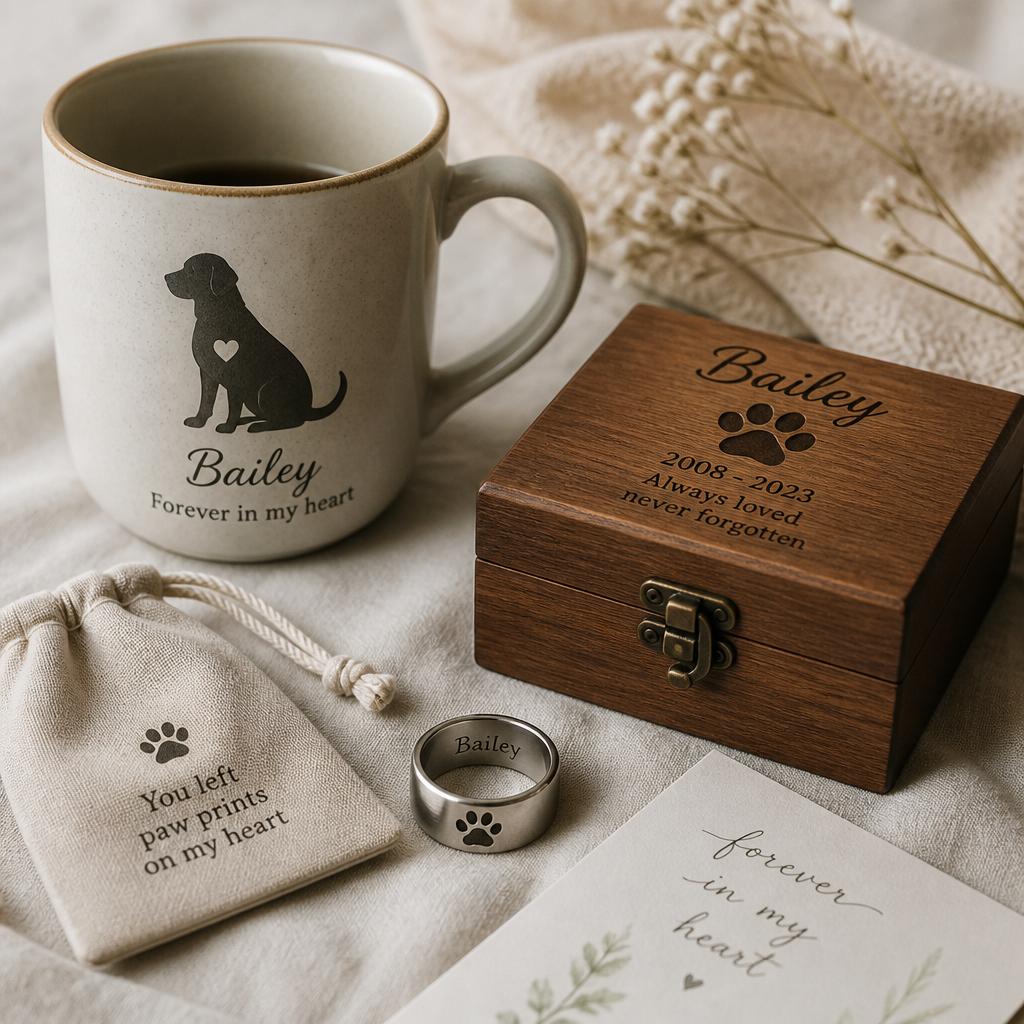
Woven memorial blankets carrying your dog's image or name, acrylic portrait memorials, engraved rings, and custom pillows are among the most cherished keepsakes that grieving dog owners reach for. These aren't generic objects. When made with care and personalization, they become physical vessels for love, something you can hold when the grief feels too large for words.
At The Soul Keep, every memorial product is crafted with this emotional purpose in mind. From woven blankets that carry your dog's likeness to acrylic portraits that capture their spirit, each piece is designed to be a companion through grief, not just a decorative object. If you're ready to create something that will hold your dog's memory with the tenderness they deserve, exploring The Soul Keep's collection is a gentle place to start.
Living Tributes
Planting a tree or a garden in your dog's name offers a growing, living reminder of their presence. Some families choose a favorite outdoor spot for this. Others create a small planting on a windowsill or balcony. The act of tending something that lives and grows in their memory can be quietly healing over months and years.
Write Down Their Story
A written record of your dog's life, their personality quirks, their favorite spots, the games they invented, the way they snored, is something you will treasure for the rest of your life. It doesn't have to be long or polished. Just honest. Just yours.
Grief Support Resources for Pet Owners
You don't have to carry this grief alone, and there are real, dedicated resources built specifically for people mourning the loss of a pet. These aren't generic mental health services. They understand what it means to lose a dog.
Pet Loss Hotlines
Several US veterinary schools operate dedicated pet loss support hotlines staffed by trained volunteers. The Tufts University Pet Loss Support Helpline is available Monday through Thursday from 6 pm to 9 pm EST, with 24-hour voicemail. Cornell University's College of Veterinary Medicine also operates a pet loss support hotline staffed by veterinary students. These are free, compassionate resources specifically for grieving pet owners.
Online Support Groups and Communities
The Association for Pet Loss and Bereavement offers free, moderated chat rooms on multiple days each week, including anticipatory grief support for those whose dogs are in declining health. The Michigan State University Veterinary Medical Center offers a free remote support group twice a month, accessible by phone or video. These communities understand the specific texture of pet grief in ways that general bereavement groups sometimes don't.
When to Seek Professional Help
If you're experiencing prolonged insomnia, significant anxiety, depressed mood that is interfering with daily life, or any thoughts of self-harm, please reach out to a licensed mental health professional. Pet grief can deepen into clinical depression in some cases, and that is nothing to be ashamed of. It is a signal that you deserve more targeted support.
Comparing Three Approaches to Dog Grief Support
| Approach | Best For | What It Provides |
|---|---|---|
| Personal Rituals and Memorialization | All grieving pet owners, especially in the early weeks | A physical and emotional anchor. Creates tangible connection to your dog's memory through keepsakes, memory spaces, and writing. Works at your own pace, on your own terms. |
| Peer Support Groups (Online or In-Person) | Those who feel isolated or whose grief isn't understood by those around them | Community and validation from people who truly understand pet loss. Free options widely available. Particularly helpful for those whose social circle minimizes pet grief. |
| Professional Grief Counseling | Those experiencing prolonged, intense grief or grief complicated by other life stressors | Structured, personalized support from a trained therapist. Can address guilt, complicated grief, and co-occurring anxiety or depression. Most effective when grief significantly disrupts daily functioning. |
In practice, the most supported grieving dog owners often combine all three approaches: a meaningful personal memorial, a community to share their feelings with, and professional guidance when the grief feels too heavy to carry alone. None of these are mutually exclusive, and moving between them as your needs change is completely valid.
Frequently Asked Questions
How long does grief last after losing a dog?
There is no fixed timeline for grief after losing a dog. Some people move through the most acute phase of loss within weeks. For others, especially those who had a very deep bond or who lived alone with their dog, the grief can persist for many months. Grief also doesn't follow a straight trajectory. You may feel better, then experience a fresh wave of sadness triggered by a smell, a season, or a familiar spot. All of this is normal. What matters is that you allow yourself to feel it without judgment, and seek support if the grief is significantly disrupting your daily life.
Is it normal to feel guilty after my dog died?
Yes, guilt is one of the most common and painful parts of dog grief. Whether you're second-guessing a treatment decision, an end-of-life choice, or simply moments you wish you had handled differently, know that these feelings are nearly universal among grieving pet owners. A grounding exercise that many find helpful is to honestly ask: would the outcome realistically have been different? In most cases, the answer is no. Your choices were made with love and the best information you had at the time. That is what your dog knew.
What are the best ways to memorialize a dog?
The best memorial is the one that feels most true to your dog's spirit and your relationship with them. Popular and meaningful options include personalized woven blankets or acrylic portrait memorials, engraved rings, framed photographs, a dedicated garden space, written letters or memory journals, and small home memory corners. The key is that the memorial should feel personal, not generic. Objects that carry your dog's image, name, or something uniquely theirs carry the most emotional weight over time.
How do I explain a dog's death to a young child?
Gentle honesty is the most supportive approach. Use clear language, telling your child that your dog died and will not be coming back, while also reassuring them that their grief is completely normal and that the whole family misses their companion. Avoid euphemisms like "went to sleep" that can create confusion or fear. Give your child an active way to participate in honoring the dog, whether through a small ceremony, choosing a photo, or making a scrapbook page. Let them see that you're sad too, so they know their feelings are shared.
Are there free pet loss support resources in the US?
Yes, several free resources exist. Tufts University's Pet Loss Support Helpline is staffed Monday through Thursday from 6 pm to 9 pm EST. Cornell University's College of Veterinary Medicine operates a free pet loss hotline staffed by veterinary students. The Association for Pet Loss and Bereavement offers free moderated online chat rooms multiple times per week. The Ohio State University Veterinary Medical Center also provides pet loss resources and online community support. These are specifically designed for pet owners and carry a deep understanding of what losing a dog means.
Can a physical keepsake really help with grief?
Yes. Many grief counselors note that tangible, physical objects serve an important function in bereavement: they give grief somewhere to live outside of the mind. A personalized blanket with your dog's portrait, an engraved ring, or a ceramic keepsake isn't just a decorative item. It becomes a physical extension of the bond you shared. Reaching for it on hard days, keeping it visible in your home, or gifting something similar to a friend who is grieving can provide real and lasting comfort. The key is personalization: something that truly represents your specific dog and your specific love for them.
When is it the right time to get another dog?
Only you can answer this, and there is no universally correct answer. Some people find that welcoming a new dog after a period of mourning helps them heal and opens their heart again. Others need years, or decide a new dog isn't right for them at all. Neither choice is better or more loving. The one thing most grief counselors caution against is rushing into a new pet primarily to escape the grief, rather than to genuinely welcome a new companion. Give yourself permission to move at your own pace, and trust that you'll know when, or if, the time feels right.
We'd love to hear how you've found comfort and healing after losing a beloved dog. Feel free to share your experience in the comments below, your story might be exactly what another grieving pet owner needs to read today.
References
- Understanding the grieving process when a pet dies: support for individuals, families, and therapists
- Tufts University Pet Loss Support Helpline: free grief support for pet owners
- Free pet loss grief support groups and hotlines for bereaved pet owners
- Helping children cope with the death of a pet: practical guidance for families
- Ohio State University Veterinary Medical Center: pet loss support and online resources