

How Long Does Grief Last After the Death of a Pet?
You keep reaching for your phone to send a photo of something they would have loved. You set their bowl out of habit before you even realize what you've done. If you're wondering how long grief lasts after the death of a pet, know this first: there is nothing wrong with you for hurting this deeply. Losing a pet is losing a daily companion, a constant source of comfort, and an irreplaceable bond. The pain is real, it is valid, and it deserves to be taken seriously. This guide walks you through what research and lived experience tell us about the grief journey, what shapes it, and how to find your footing, gently, at your own pace.
Table of Contents
- Is There a Set Timeline for Pet Grief?
- Quick Takeaways
- The Phases of Pet Grief: What to Expect
- Factors That Shape How Long Your Grief Lasts
- Why Pet Grief Comes in Waves
- Healthy Grief vs. Prolonged Grief: Knowing the Difference
- How to Support Your Own Healing
- Honoring Their Memory as Part of Healing
- Frequently Asked Questions
- References
Is There a Set Timeline for Pet Grief?
The most honest answer, and the most compassionate one, is that there is no universal timeline. Grief after the death of a pet is shaped by who you are, what that relationship meant to you, and the specific circumstances of the loss. Anyone who hands you a fixed end date is oversimplifying something deeply human.
That said, research does offer a general picture. The most intense phase of grief, the raw, barely-functioning stage, typically lasts between one and three months for most people. After that initial period, grief does not disappear. It changes shape. General grief symptoms often continue for somewhere between six months and a year, gradually softening rather than ending on a clear day. Some people grieve for two years or more, especially when the bond was long, deep, or the loss was sudden and traumatic. All of these are normal.
What matters most is not how your timeline compares to anyone else's. What matters is whether the intensity of your pain is gradually easing over time, and whether you are still able to move through daily life even while carrying your grief.
Quick Takeaways
| Key Insight | Explanation |
|---|---|
| There is no correct grief duration | Grief after pet loss has no fixed endpoint. The timeline is shaped by your bond, your history, and your support system, not a calendar. |
| Acute grief often eases within 1 to 3 months | The most intense, disorienting phase typically softens within the first few months, though many people find the 6-month mark unexpectedly difficult. |
| Grief arrives in waves, not a straight line | You may feel okay one morning and then be overwhelmed by the sound of a familiar bark or the smell of their favorite blanket. This is entirely normal. |
| Physical symptoms are part of grief too | Fatigue, appetite changes, difficulty concentrating, headaches, and digestive discomfort are all recognized physical expressions of pet loss grief. |
| Pet grief is often disenfranchised grief | Many bereaved pet owners face social pressure to "move on," which can deepen the pain. Your grief deserves the same respect as any bereavement. |
| Prolonged grief disorder is a real risk | Research shows that about 7.5% of people who lose a pet may meet the criteria for prolonged grief disorder. Seeking professional support is a sign of strength. |
| Meaningful rituals support healing | Creating a tangible memorial, whether a keepsake, a ceremony, or a personalized tribute, helps give your grief a healthy place to rest. |
The Phases of Pet Grief: What to Expect
Grief after losing a pet does not unfold in neat, numbered stages you move through one by one. You might cycle back to feelings you thought had passed, or feel multiple emotions at the same time. Still, there are recognizable phases that many grieving pet owners experience, and naming them can help you feel less alone in what you are going through.
Shock and Denial
In the first hours or days after your pet dies, it is common to feel numb, disbelieving, or strangely calm. You may catch yourself expecting to hear them at the door or reaching to fill their water bowl. This is your mind's protective response to overwhelming pain, and it is a completely normal first reaction.
Shock typically does not last more than a few days, but moments of disbelief can return in waves for months. Grief is not a problem to be solved quickly.
Pain, Guilt, and Bargaining
Once the shock softens, the full weight of the loss often settles in. Many pet owners experience intense guilt during this phase, asking themselves whether they made the right decision about treatment, whether they noticed signs early enough, or whether they were there at the end. This is one of the most painful aspects of pet loss, and it is also one of the most common.
Please be gentle with yourself here. The guilt you feel is often a reflection of how deeply you loved them, not evidence that you failed them. You made the best decisions you could with the knowledge and resources you had.
Anger and Deep Sadness
Anger can arise during grief in ways that feel confusing. You may feel angry at the circumstances, at the illness, at the vet, or even at yourself. Deep sadness may settle in as the reality of a daily life without your companion becomes clear. This is the longest phase for many people, and it is the one that most benefits from patience and gentle self-care.
Adjustment and Finding a New Normal
Over time, most people move toward a phase of adjustment. This does not mean forgetting your pet or "getting over" the loss. It means learning to carry your love for them in a new way, one that allows you to also carry joy again. Many people describe this as not moving on, but moving forward.

Factors That Shape How Long Your Grief Lasts
If you are wondering why your grief feels so much heavier or longer than what someone else describes, these factors may explain why. Grief duration is not a measure of love, but it is shaped by a deeply personal combination of circumstances.
The Depth and Length of Your Bond
The stronger the attachment and the longer the relationship, the more intense and lasting the grief is likely to be. A companion you shared fifteen years with is woven into the rhythm of your daily life in hundreds of ways, and unpicking that takes time. If your pet was also your primary source of emotional support, the loss can feel even more profound.
How the Death Happened
Sudden, unexpected loss, such as an accident or an unexpected diagnosis, tends to produce more intense acute grief than a loss that came after a period of anticipated decline. When you have had time to say goodbye and prepare, grief is no less real, but the initial shock can be somewhat gentler. Traumatic or violent losses often extend the acute grieving period significantly.
The Decision to Euthanize
Pet owners who chose euthanasia for their companion often carry a particularly complex form of grief. Guilt about the decision is extremely common, even when euthanasia was clearly the most compassionate choice. This grief deserves its own space and support.
Your Current Life Circumstances
If you are going through other stressors at the same time, a health challenge, a job change, family difficulties, your grief can feel heavier and last longer. Conversely, a strong social support system can help ease the grieving process, though it can never rush it.
Social Recognition of Your Loss
One of the most painful realities of pet loss is what mental health professionals call disenfranchised grief. Research consistently finds that bereaved pet owners often face pressure to minimize their pain, hearing things like "it was just a pet." This lack of social support actively makes grief harder. If you have experienced this, please know your loss is real, significant, and worthy of every tear you have shed.
Pro tip: Seek out communities of people who truly understand pet loss, whether online support groups, pet loss counselors, or compassionate friends who have been through a similar experience. Being heard makes a measurable difference in the healing process.

Why Pet Grief Comes in Waves
One of the most disorienting aspects of pet grief is that it does not get steadily better each day. Most people find that their grief arrives in waves: periods of acute sadness that appear unexpectedly and then subside, interspersed with calmer stretches where daily life feels more manageable.
These waves are often triggered by very specific sensory cues. The sound of a collar jingling in another room. The time of day you always went for a walk. A bag of their food still sitting in the pantry. Returning home to a house that feels different in a way you cannot fully name. These triggers do not mean you are going backward in your grief. They are evidence of how deeply your pet was woven into your everyday life.
You may not get over losing a pet, but you will grow with it. Grief changes shape as your life moves forward. The love stays. The sharp edges of pain gradually soften.
Many people find that the six-month mark is unexpectedly hard. The initial rush of support from friends and family has quieted, but the grief is still very present. If this is where you are right now, you are not behind. You are exactly where many grieving pet owners find themselves, and it is okay to still need support at that point.
Healthy Grief vs. Prolonged Grief: Knowing the Difference
The vast majority of people who lose a beloved pet will move through their grief naturally over time. But for some, grief can become stuck in a way that significantly impairs daily functioning well beyond the expected timeframe. Knowing the difference can help you recognize when it might be time to reach out for professional support.
Signs That Grief Is Moving, Even Slowly
Healthy grief naturally shifts over time. You will have more bad days than good ones at first, and then gradually the balance tips. You might notice fewer intrusive memories, a slowly returning ability to concentrate, moments of genuine laughter or warmth when you think of your pet, and a gradual return to daily activities. Progress is rarely linear, but movement is generally happening.
Signs That You May Benefit From Professional Support
Research published by Harvard Health found that about 7.5% of people who have lost a pet meet the criteria for prolonged grief disorder, a proportion similar to those who develop the condition after losing a close human loved one. People experiencing this level of grief should consider seeking support and monitor for grief-related physical effects like persistent fatigue, headaches, and dizziness.
Reaching out for help is not a sign that you loved too much. It is a sign that you are taking your own wellbeing seriously, which is something your pet would have wanted for you.
Some signs that professional support could help include: grief that shows no signs of easing after many months, complete inability to engage in work or family life, persistent thoughts that life has no meaning, and severe isolation from friends and loved ones.
Pro tip: If you are not ready for therapy, a pet loss support group, even an online one, can be a gentle first step. Hearing that others feel exactly what you are feeling can lift an enormous weight.
How to Support Your Own Healing
There is no formula for healing from pet loss, but there are practices that many grieving pet owners find genuinely helpful. These are not meant to rush you or give you a task list. Think of them as small, gentle things you can offer yourself.
Allow Yourself to Feel Without Judgment
One of the most healing things you can do is give yourself full permission to grieve. Cry if you need to. Talk about your pet as often as you want to. Say their name. Share stories. Suppressing grief does not move it along. It simply delays it and often makes it heavier when it finally surfaces.
Maintain Gentle Routines
Grief can make basic daily rhythms feel impossible. Sleep disruption, appetite changes, and difficulty concentrating are recognized physical symptoms of pet loss. Gentle, consistent routines, regular meals, short walks, a consistent bedtime, can help stabilize your nervous system while your heart is healing.
Let Others Help You
Some people will not understand your grief, and that is painful. But others will, and they want to show up for you. Let them. Accept the meal someone offers, say yes to a walk with a friend, or simply tell someone what you are carrying. Connection is one of the most powerful antidotes to the isolation that grief can create.
Be Patient With Grief Triggers
When a trigger hits and grief surges back, try to meet it with kindness rather than frustration. That wave is not a setback. It is love with nowhere to go in that moment. Breathing through it, sitting with it briefly, and letting it pass is often more healing than trying to push it away.
Honoring Their Memory as Part of Healing
Creating a tangible memorial for your pet is not just a sentimental gesture. It is an act of healing. Having a physical place to put your grief, a keepsake you can hold, a personalized tribute you can look at, gives your love a form that persists beyond the loss itself.
Many grieving pet owners find that meaningful rituals, both in the immediate aftermath of loss and in the months that follow, make a genuine difference in how they navigate their grief. A small ceremony, a candlelight remembrance, planting something living in your pet's honor, or commissioning a piece of art that captures who they were, all of these give your grief somewhere to go.
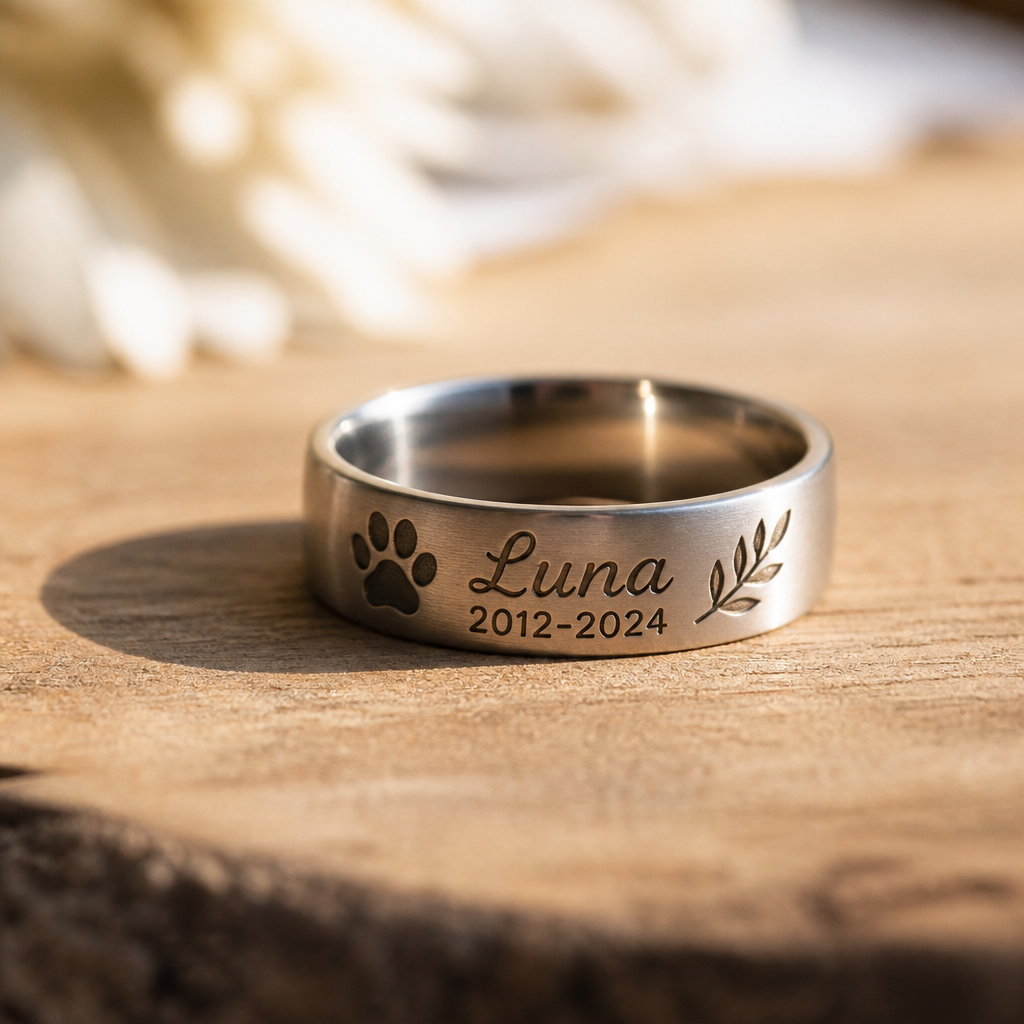
At The Soul Keep, we believe that a well-chosen keepsake can become a quiet source of comfort you return to again and again. A personalized memorial blanket woven with your pet's photo and name can make a cold evening feel a little less empty. A custom engraved ring lets you carry your companion close on the days when missing them feels like a physical ache. A personalized pillow with their likeness can sit in the spot where they used to rest, a gentle, comforting presence in their absence.
These are not replacements for your pet. They are tangible expressions of a bond that does not end with a life. They are ways of saying: you mattered. You still matter. And I carry you with me.
A Comparison of Memorial Approaches and What They Offer
| Memorial Approach | What It Offers | Best For |
|---|---|---|
| Personalized physical keepsake (blanket, ring, pillow, mug) | A daily, tangible connection to your pet's memory. Something you can hold, wear, or see during quiet moments. | Grieving owners who find comfort in physical closeness and want a lasting, meaningful object. |
| Memorial ritual or ceremony | A structured moment to honor your pet, gather those who loved them, and mark the significance of the loss. Can be private or shared. | Those who need a formal space to say goodbye and find closure in shared remembrance. |
| Living tribute (planting a tree, garden stone, donation in their name) | A growing, evolving reminder of your pet's life. Connects their memory to something that continues to grow and change. | Owners who find comfort in nature, growth, and the idea that their pet's impact continues beyond their physical life. |
Frequently Asked Questions
How long does grief last after the death of a pet?
There is no single answer. The most intense acute phase of grief typically eases within one to three months, but broader emotional adjustment can continue for six months to a year or longer. Some people grieve deeply for two years or more, particularly when the bond was very close or the death was sudden. What matters is that the intensity gradually softens over time, not that it disappears on a schedule.
Is it normal to grieve a pet as deeply as a person?
Yes, completely. Research published by Harvard Health found that some people report the loss of a pet as the most distressing bereavement they have ever experienced, even compared with the loss of a close human loved one. The depth of grief reflects the depth of the bond, and a bond with a daily companion of many years can be as powerful as any human relationship.
Why does my grief come back even when I thought I was feeling better?
This is one of the most universal experiences of pet grief and it is entirely normal. Grief researchers describe this as the wave model of grief: rather than steadily improving, grief arrives in waves triggered by specific sounds, smells, times of day, or routines you once shared. These waves gradually become less frequent and less overwhelming over time, but they do not disappear on a fixed schedule. A surge of grief months later is not a setback. It is love surfacing in response to a memory.
When should I seek professional help for pet grief?
Consider reaching out to a counselor or therapist if your grief shows no signs of easing after many months, if you are unable to function at work or maintain relationships, if you are experiencing persistent hopelessness or thoughts that life has no meaning, or if your physical health is suffering. About 7.5% of people who lose a pet may meet the criteria for prolonged grief disorder, and professional support can make a real difference. Seeking help is an act of self-compassion.
Can creating a memorial for my pet actually help with grief?
Yes. Creating a meaningful memorial or tangible tribute gives your grief a constructive outlet and helps maintain your ongoing bond with your pet. Research and clinical experience both support the value of memorialization as a coping mechanism for bereaved pet owners. Whether that is a personalized keepsake you can hold, a ceremony, a garden tribute, or a piece of art, honoring your pet's memory actively supports emotional healing rather than delaying it.
Why do I feel guilty after losing my pet?
Guilt is one of the most common and painful aspects of pet loss grief, especially for owners who made end-of-life care decisions. The guilt you feel almost always reflects how profoundly you loved your pet and how seriously you took your responsibility to them. In most cases, you made the most compassionate decisions you could with the information and resources available to you. Be as gentle with yourself as you would be with a close friend in the same situation.
Will I ever stop missing my pet?
In all honesty, you may always miss them in some way. That is not a failure of healing. It is a reflection of real love. What changes over time is the nature of how you carry that missing. The sharp, overwhelming ache gradually softens into something that can coexist with joy, warmth, and the ability to remember your pet with a smile as often as with tears. You do not "get over" a great love. You grow around it.
If you have lost a pet and found your own path through grief, or if you are still in the middle of that journey right now, we would gently love to hear what has helped you the most.