

What to Say When Someone Loses a Pet: A Compassionate Guide
When a friend or family member loses a beloved pet, it can be hard to know what to say. You care about them deeply, but the words feel clumsy or inadequate. That fear of saying the wrong thing sometimes pushes people toward silence, and that silence, however well-intentioned, can leave a grieving pet owner feeling even more alone. This guide is here to help you show up for the people you love. We'll walk you through exactly what to say when someone loses a pet, what to avoid, and how to offer support that truly comforts, whether through words, actions, or a meaningful keepsake.
Table of Contents
- Why Pet Loss Grief Is Real and Profound
- Quick Takeaways
- Exactly What to Say to Someone Who Lost a Pet
- Phrases to Avoid and What to Say Instead
- How to Support a Grieving Pet Owner Over Time
- Supporting Children Through Pet Loss
- Meaningful Gestures Beyond Words
- Frequently Asked Questions
- References
Why Pet Loss Grief Is Real and Profound
Before we talk about the right words to say, it helps to understand what your grieving friend is actually going through. Pet loss is not a small or trivial sadness. According to an RSPCA survey, 60% of people consider their pets to be family, 32% consider them their best friends, and 8% consider them companions. When someone who felt that way loses their pet, they are experiencing a genuine bereavement.
Grief from losing a beloved pet can be as intense as that from losing a human loved one, according to a study published in PLOS One. Researchers surveyed 975 adults, and among those who had lost both a pet and a loved one, 21% said the loss of their pet was the most distressing bereavement they had ever experienced, even compared with the death of a family member.
Two-thirds of people who've lost a pet have been shocked by how intense their grief felt. Over 9 in 10 report feeling heartbroken or deeply sad, and guilt and loneliness are also very common experiences. Knowing this helps you come alongside someone with the empathy and patience they truly need.
Quick Takeaways
| Key Insight | Explanation |
|---|---|
| Use the pet's name | Saying the pet's name makes your message feel personal and shows you recognize them as an individual, not just "a pet." |
| Acknowledge the bond, not just the loss | Phrases like "I know how much they meant to you" validate the depth of the relationship and honor the grief. |
| Avoid replacement language | Never suggest getting a new pet. Each animal holds a unique, irreplaceable place in an owner's heart. |
| Silence is not kindness | Saying nothing because you're afraid of the wrong words can feel like abandonment. A brief, heartfelt message is always better than none. |
| Skip the clichés | Phrases like "they're in a better place" or "at least they had a good life" often feel dismissive, even when meant kindly. |
| Offer something specific | Rather than "let me know if you need anything," offer a concrete action, such as dropping off a meal or sitting with them for an afternoon. |
| Follow up over time | Grief does not end after the first week. Checking in a month later shows ongoing care and helps prevent the person from feeling forgotten. |
Supporting a grieving pet owner well starts with one simple shift in perspective: treat their loss the way you would any other significant bereavement. Nearly 6 in 10 people who have lost a pet have felt they had to hide their grief, and the same number believe there is a stigma around grieving for a pet. When you reach out with genuine compassion, you are actively countering that isolation.

Exactly What to Say to Someone Who Lost a Pet
Good news: you don't need to be eloquent or find a poetic phrase. The most comforting words are almost always the simplest ones. What matters is that they feel genuine, specific, and free of judgment.
Heartfelt phrases that genuinely help
"I'm so sorry for your loss" is almost always appropriate. It shows you recognize their grief without minimizing it or trying to fix it. That simplicity is a feature, not a flaw. You don't need to explain or justify their right to grieve. You just need to name it.
Here are some other phrases that land gently and well:
- "[Pet's name] was so loved and so lucky to have you." This acknowledges the bond they shared and can be genuinely comforting.
- "I know how much [pet's name] meant to you. I'm so sorry."
- "I'm here if you want to talk, or just be quiet together. No pressure either way."
- "I'd love to hear a favorite story about [pet's name], whenever you feel like sharing."
- "No need to reply. I just want you to know I'm thinking of you."
Mentioning the pet by name makes your message more personal and sincere. If you know the pet's name, use it. If you don't, it's okay to ask.
What to say in a card or text message
If you're writing a card or reaching out by text, keep it brief and warm. A brief message that uses the pet's name, names the loss, and offers a specific kind of care can do a great deal of good. For example:
"I'm so sorry you lost Luna. I know she meant the world to you. I'm here today if you want company or quiet support."
That single sentence does three things: it names the pet, validates the weight of the loss, and offers something concrete. You don't need to write more than that.
Pro tip: If you're unsure what to write in a card, start with "I keep thinking about you." It's honest, warm, and opens the door without putting any pressure on the grieving person to respond in a particular way.
Phrases to Avoid and What to Say Instead
Even people who love someone deeply can accidentally say something that stings. These phrases tend to feel hurtful not because they're cruel, but because they unintentionally dismiss or rush the grief. Knowing them ahead of time helps you steer clear.
The most common phrases that hurt
Dismissing a pet's death with "It was only a pet" minimizes a person's loss and can make their grief feel invalid. For many people, pets are just as much a family member as the humans in the family, and a person may even feel more grief over the loss of a pet than a person.
Suggesting that someone can replace their pet with phrases like "You can always get another one" diminishes the deep bond they had with the pet they lost. Pets are not interchangeable, and each one holds a special place in a pet parent's heart.
Here is a quick comparison to keep handy:
| Phrase to Avoid | Why It Hurts | A Better Alternative |
|---|---|---|
| "It was just a pet." | Dismisses the bond and invalidates the grief entirely. | "I know how much [pet's name] meant to you. This is a real loss." |
| "You can always get another one." | Implies the pet was replaceable, which overlooks the unique relationship they had. | "No other pet could ever replace [pet's name], but I hope your memories bring you comfort." |
| "They're in a better place." | Can feel dismissive and may not align with the person's beliefs. | "I hope you find some peace in knowing how much love you gave them." |
| "At least they had a good life." | Rushes the person toward acceptance before they're ready. | "I know this is so hard. I'm here with you in it." |
| "Let me know if you need anything." | Places the burden on the grieving person to ask, which is often too much. | "I'm dropping off dinner Thursday. Does 6 pm work for you?" |
Platitudes like "Everything happens for a reason" rarely bring comfort in grief. Even if well-intended, they may leave people searching for reasons or blame. When in doubt, say less and listen more.
Pro tip: If you're not sure what to say, simple honesty works well. Saying "I don't know what to say right now" is better than avoidance. A caring acknowledgment, no matter how brief, can be far more comforting than silence.
How to Support a Grieving Pet Owner Over Time
The first few days after a pet's death are when condolences tend to pour in. But grief doesn't end on day three or week two. Even when we say and do the right things, one of the hardest things for people to comprehend about grief is that it's not linear. Your friend may be struggling just as much a month later, and that's exactly when most people have stopped checking in.
Following up beyond the first week
A simple "I've been thinking about you" text three or four weeks after the loss can mean more than the initial outpouring of sympathy. It says: I haven't forgotten, and neither should you have to pretend you're fine by now. Offering two concrete options can be kinder than "Let me know if you need anything," because grief often makes decision-making feel impossible.
Try: "I was thinking of you today. I can stop by Saturday or Sunday this week, whatever works better for you." That removes the need for the grieving person to organize their own support.
Letting them lead the conversation
Our natural inclination is to try to help those we love avoid pain. But the reality is that a grieving person has to go through the pain to move through it. There is no "getting over it." The most supportive thing you can do is follow their lead. Let them talk about the pet if they want to. Let them go quiet if they need that too. Both are valid.
The RSPCA recommends letting the person talk about their feelings freely, keeping language simple and honest, and avoiding euphemisms like "gone away" or "they've gone to a better place" as these can cause confusion.

Supporting Children Through Pet Loss
If a child in your life has lost a pet, or if you're a parent helping your child cope, the same core principles apply with a few important adjustments.
Use honest, clear language with children
"Using euphemisms when speaking with children about death can create lots of confusion, cause lots of worry, lead to self-blame, and make grieving harder." Saying a pet "went to sleep" or "went on a trip" can genuinely distress children or leave them confused about why the pet hasn't returned.
It's important for parents to share and discuss their emotions with children of all ages. Children need to know it's okay to feel sad, angry, or whatever emotion they're feeling with this loss. Modeling that grief is a healthy, natural response gives children permission to feel and process their own sadness.
Words that help a grieving child
Keeping it simple and age-appropriate matters most. Here are phrases that tend to resonate:
- "It's okay to feel sad or to cry. [Pet's name] was your best friend, and it's normal to miss them."
- "[Pet's name] felt so loved because of you. You were such a good friend to them."
- "It's okay to be angry too. We can feel lots of feelings at once when someone we love is gone."
Creating a small memory ritual with a child, such as drawing pictures of the pet, writing down favorite memories, or planting a flower together, can give grief a healthy outlet and make the pet's life feel honored rather than simply erased.
Meaningful Gestures Beyond Words
Sometimes the most powerful thing you can offer isn't a sentence. It's a gesture that shows the grieving person their beloved companion's life mattered, and that their loss is real.
Practical acts of care
In the immediate window after a loss, the most meaningful gifts are usually the ones that reduce friction: a meal delivery, a grocery card, a warm blanket, a small care package, or a note that uses the pet's name. These small acts say "I see you" without requiring the bereaved person to do anything in return.
Personalized memorial keepsakes
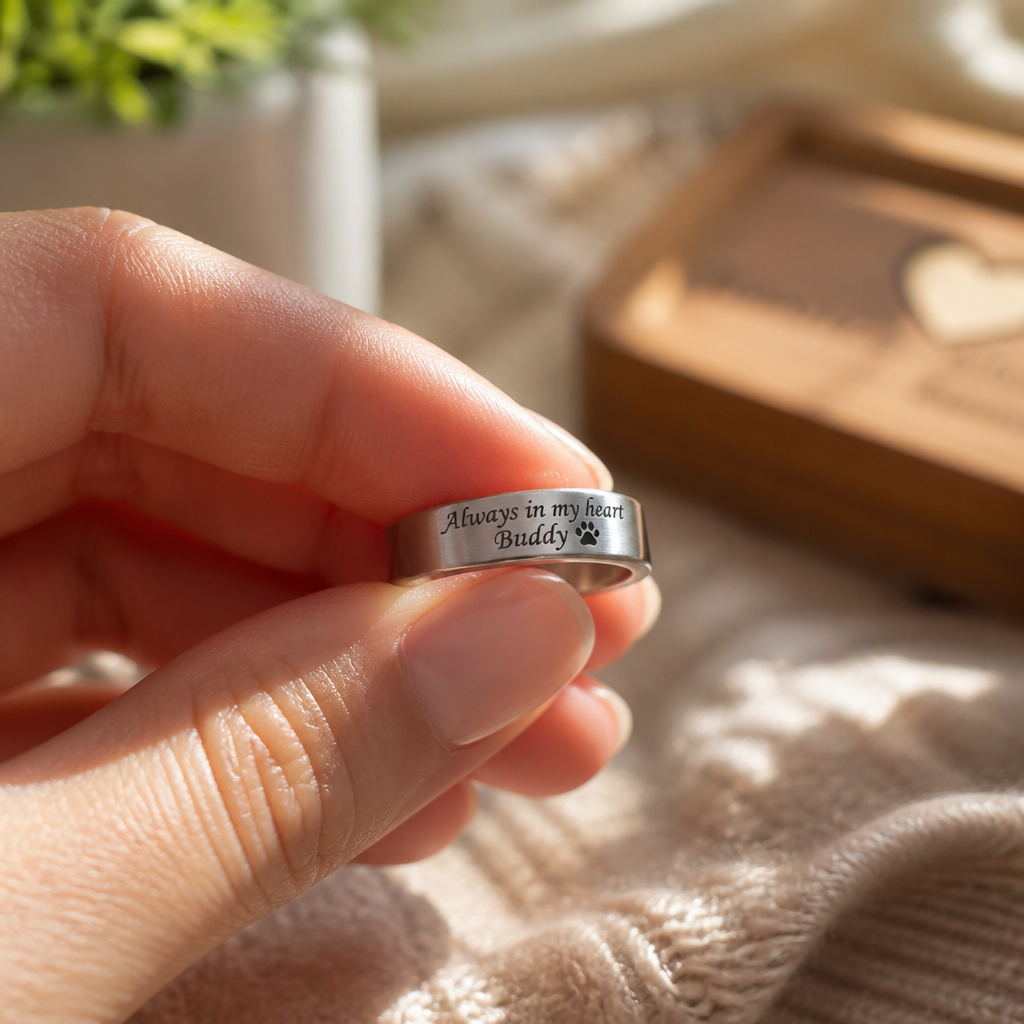
A thoughtful memorial gift can give a grieving pet owner something tangible to hold onto. At The Soul Keep, we believe that grief deserves more than a generic sympathy card. Personalized keepsakes, like a custom woven blanket featuring a pet's photo, an engraved ring worn close to the heart, or a ceramic mug with the pet's name and portrait, become daily anchors of memory and comfort.
These aren't novelty items. They're carefully crafted tributes that honor the bond between a person and the companion they've lost. Knowing how to comfort a friend or family member during this time can be difficult, but a thoughtful gift can be a good place to start, to remind them that they are not alone in their grief.
If you're choosing a memorial gift for someone you love, consider items that can be personalized with the pet's name or image. A custom acrylic memorial, a photo pillow, or a car ornament are all ways to carry that love forward in everyday life. The act of choosing something specific to that pet, rather than a generic sympathy gesture, communicates that you understood how unique and irreplaceable they were.
Pro tip: When gifting a memorial keepsake, include a handwritten note that names the pet and shares a memory or observation about them. Even a single line like "I always loved how [pet's name] would greet me at the door" turns a gift into something deeply personal.
Frequently Asked Questions
What is the most comforting thing to say when someone loses a pet?
The most comforting thing is usually the most honest: "I'm so sorry. I know how much [pet's name] meant to you." Naming the pet, naming the relationship, and naming the pain without rushing to fix it is what truly helps. Keep it simple, keep it sincere, and let the person respond however they need to.
Is it okay to say nothing because I don't want to say the wrong thing?
It's understandable to feel this way, but silence is rarely the kindest option. A grieving pet owner who hears nothing from the people they care about can feel forgotten or judged. Even a brief "I'm thinking of you" is far better than staying quiet. If you truly don't know what to say, it's perfectly fine to say exactly that: "I don't know what to say, but I want you to know I'm here."
How long does grief over a pet usually last?
There is no single timeline. Some people move through acute grief in weeks; others carry it for many months. Research has found that a meaningful proportion of people who lose a pet meet criteria for prolonged grief. What matters is that you keep checking in, not just in the first week but in the weeks and months that follow. Grief is not linear, and your friend may have harder days long after the initial loss.
What should I avoid saying to someone who lost their pet?
Avoid any language that minimizes the loss, rushes recovery, or suggests the pet was replaceable. Specific phrases to steer away from include "It was just a pet," "You can always get another one," "They're in a better place," and "At least they had a good life." Even when well-intentioned, these phrases can make a grieving person feel unheard and alone in their pain.
Is a personalized memorial gift appropriate for pet loss condolences?
Yes, and it can be one of the most meaningful gestures you make. A personalized keepsake that features the pet's name, breed, or photo shows that you recognized the individual life that was lost. Items like custom blankets, engraved jewelry, or photo ceramics give the grieving owner something tangible to hold and a daily reminder that their love for their pet was real, valid, and worth honoring. It's worth choosing something specific to the pet rather than a generic gift.
How can I support a coworker who lost a pet without overstepping?
Keep it brief but genuine. A short message that acknowledges the loss by name and offers care without demanding a response is the right tone for a professional setting. Something like "I'm sorry to hear about [pet's name]. Please don't feel any pressure to reply. I just wanted you to know I'm thinking of you." This validates their grief while respecting the workplace dynamic and their need for privacy.
We'd love to hear from you. Have you found a particular phrase or gesture that brought real comfort to someone grieving a pet? Share your experience in the comments below.
References
- Comforting words and phrases to use when someone loses a pet, from Calm
- RSPCA guidance on supporting someone through pet bereavement
- Harvard Health Publishing article on the intensity of grief after pet loss
- Common phrases that hurt when someone loses a pet and compassionate alternatives
- What to say and what to avoid when someone loses a pet, from Chewy