

Why an Acrylic Pet Memorial Can Hold Your Pet's Light
Losing a pet can leave a quiet space in your home that feels impossible to fill. Some mornings you reach for the leash or the food bowl before you remember. If you're looking for a way to keep your companion close, an acrylic pet memorial offers something lasting. Clear, smooth, and sturdy, acrylic catches light in a way that suits the memory of a life well loved. In this guide, we'll walk through why this material works so beautifully for remembrance, how to choose and personalize one, and how to care for it over time. No rush, and no wrong way to begin.
Table of Contents
- Quick Takeaways
- Why Acrylic Holds Light So Well
- Grief Needs a Place to Land
- Choosing Words and Photos That Feel Like Them
- Acrylic Compared With Other Memorial Materials
- Caring for Your Acrylic Memorial Over Time
- Displaying Your Memorial at Home
- Frequently Asked Questions
- References
Quick Takeaways
| Key Insight | Explanation |
|---|---|
| Clear acrylic moves with the light | Daylight and lamp light pass through and across the surface, so your memorial looks a little different at each hour of the day. |
| Choose a photo with soft, even lighting | Sharp, well-lit images print with more clarity on acrylic than dim or flash-heavy snapshots. |
| Keep the inscription short and true | A name, the dates, and one line that sounds like your pet will feel warmer than a long paragraph. |
| Clean with soft cloths only | Acrylic scratches more easily than glass, so skip paper towels, window sprays, and abrasive pads. |
| Place it where you'll see it on hard days | A spot near the kitchen table or entryway makes the memorial part of daily life instead of something tucked away. |
| Start with one piece if you're not ready for more | You don't have to order everything at once. A single keepsake can be enough for the first season of grief. |
Why Acrylic Holds Light So Well
Acrylic has a quiet kind of brightness. Clear, smooth, and sturdy, it catches light from a window and returns it softly, so a memorial seems to look a little different every time you walk past it. For many grieving pet owners, that living quality is exactly what they hope for.
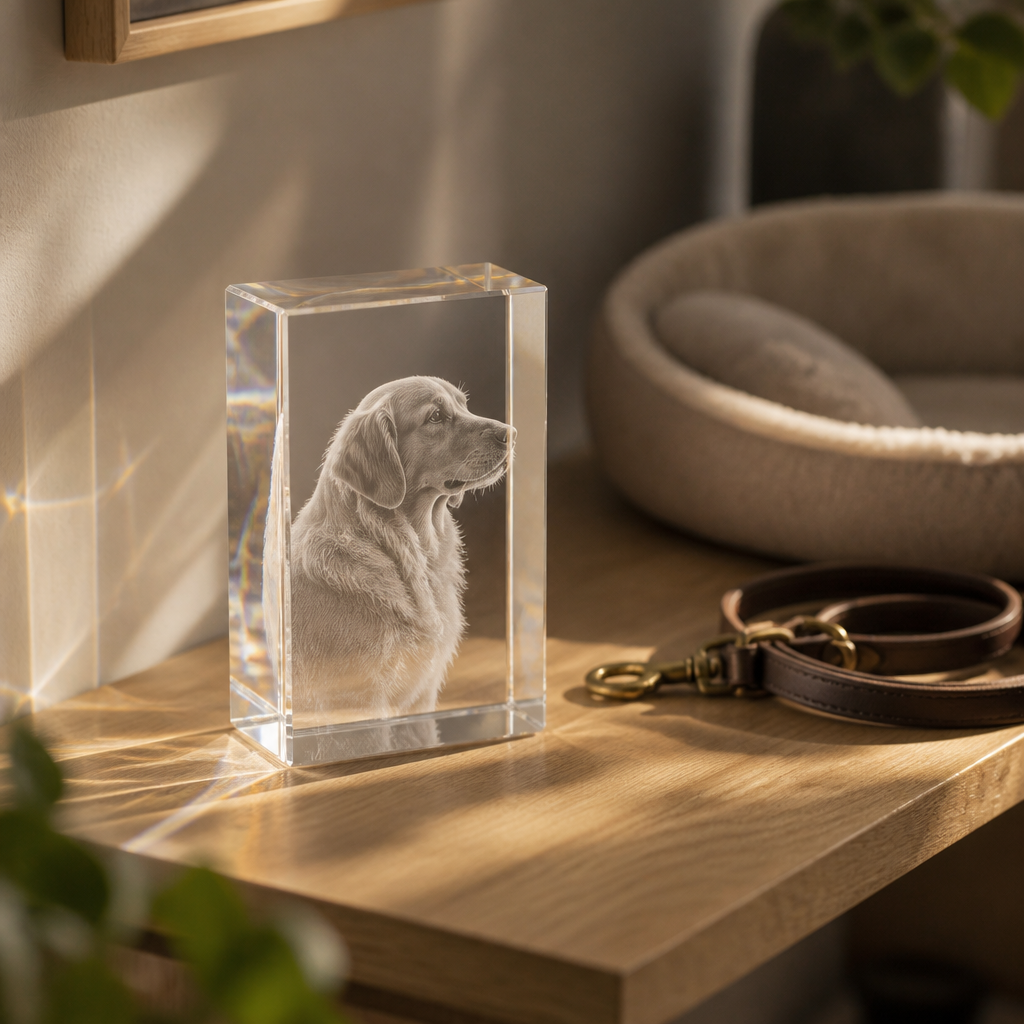
Clear acrylic is a plastic that transmits light well, which is why it appears so often in display cases and windows. When you place an engraved or photo piece near a lamp or a sunny window, the light moves through the edges and across the surface, giving the memory a gentle glow. That glow changes with the hour, and many people find it comforting to notice it at dusk.
How Daylight Moves Across the Surface
Morning light tends to be bright and clean, while late afternoon sun often warms the edges of a piece and draws out its color. Evening lamps create a quieter, more intimate mood. If you have a favorite room, spend a day there and watch how the daylight shifts before you decide where the memorial belongs.
A common mistake is placing the piece in harsh, direct sun all day. Strong sun can fade a photo over time and can heat the piece, so a spot where light reaches it softly is usually the best choice. The glow is a bonus, not the purpose. The real point is that you can see your pet every time you look up.
Pro tip: Before you commit to a spot, look at it at three different times of day. Morning, afternoon, and evening light will show you where the piece feels warm and where it gets washed out.
Why Light Suits a Memory
Many people who lose a pet describe their companion as the warm center of the room. Light feels like the right image for that, because it's something you notice without having to look hard. A memorial that catches clear acrylic light can serve as a steady presence, quietly there when the house feels too still.
A memorial doesn't need to be large to feel full. Often it's one small, steady object that makes a room feel a little less empty.
Think of the piece as a companion for ordinary moments, not only for anniversaries. Some owners find they notice it while making coffee or turning off the lamp at night. Those small moments are often where healing happens.
Grief Needs a Place to Land
Losing a pet is a real loss, even when others around you don't fully understand how deep it runs. You may find yourself reaching for routines that no longer exist, like the walk at seven or the familiar weight at the foot of the bed. Grief like this deserves a place to land.
Many pet loss guides describe a memorial as serving four broad purposes: acknowledgment, closure, celebration, and connection. Acknowledgment honors the reality that your pet mattered. Celebration shifts attention from the ending to the joy they brought, and connection gives family members a shared place to grieve together.
What a Keepsake Does for Your Heart
A keepsake gives your grief a physical focus. Instead of feeling the loss only in the empty spaces, you have something to look at, touch, and speak to. Many owners say that simply having a place to pause helps them put words to what they're feeling.
That said, a memorial doesn't have to resolve everything. Some days it will make you smile. Other days it may make you cry, and both responses are part of a healthy goodbye. Give yourself permission to feel either one.
Why Structure Helps on Hard Days
One useful way to think about memorializing a pet is that it gives structure to grief. Grief can feel shapeless, arriving in waves at the grocery store or in the middle of a quiet evening. A chosen keepsake, a planned spot in the house, or a small ritual gives those waves a shape you can work with.
You don't need to do everything at once. Trying to plan a full memorial in the first week, when emotions are still raw, is a common trap. Choose one small step, like setting aside a photo or ordering a single piece, and let the rest follow when you feel ready.
Choosing Words and Photos That Feel Like Them
The photo and inscription are where your pet's personality really shows up. This is often the part that takes the most thought, and it's completely fine if it takes a few days or even a few weeks. Your choices don't have to be perfect, only true to who your pet was.
Picking the Right Photo
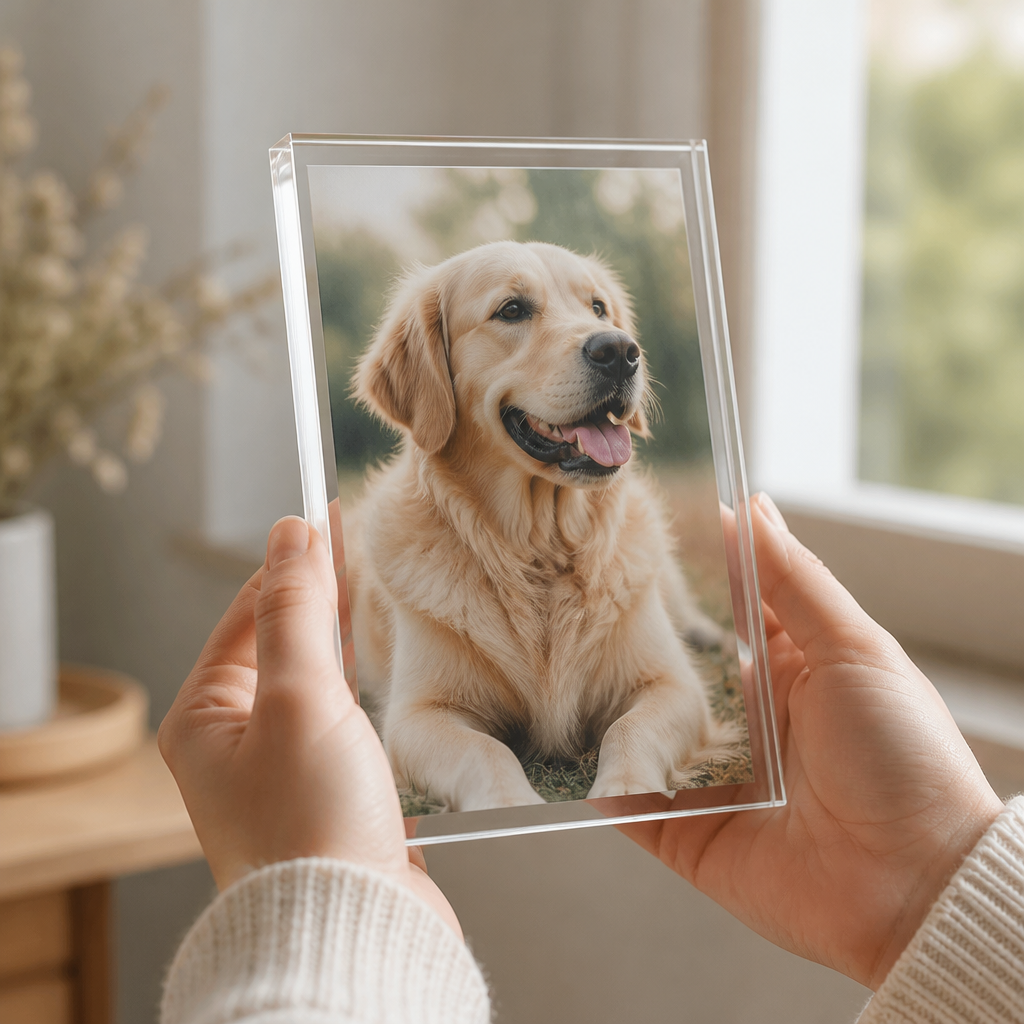
Look for a picture where your pet looks like themselves. A relaxed moment on the couch, a head tilt you'd recognize anywhere, or a candid shot from a favorite walk often says more than a posed portrait. Choose a high-resolution, sharp image, since soft or grainy photos can look blurry once printed on acrylic.
Contrast matters too. A clear subject with a simple background tends to look striking on a clear surface, while busy scenes can get lost. If you're unsure, try a few options side by side and notice which one makes you feel a little lighter when you look at it.
Writing an Inscription That Sounds Like Your Pet
Short inscriptions often hit the hardest. A name, the dates, and one line that captures your pet, such as their favorite spot or the way they greeted you at the door, can say a great deal in very few words. Many owners find that a simple phrase feels more honest than a long poem.
Read your draft out loud before you finalize it. If a line sounds like something you'd say to a friend, it's probably right. If it sounds like a greeting card you'd never send, try again with your own words.
Acrylic Compared With Other Memorial Materials
Acrylic is one of several materials people choose for pet memorials, and each one has its own character. Knowing how they differ can help you pick the one that fits your home, your budget, and the way you want to remember your companion. There's no single right answer, but there are clear trade-offs.
Ceramic and wood have long histories in pet remembrance, and many families already own a piece that suits them. Acrylic stands out for its clarity and the way it interacts with light, which is why it's often chosen for photo-based and engraved designs. Here's how the three compare in everyday use.
| Material | Strengths | Things to Watch |
|---|---|---|
| Acrylic | Clear, light-catching finish with sharp detail for photos and engraving. Lightweight and easy to hang or stand. | Scratches more easily than glass, so clean gently and avoid abrasive pads. |
| Ceramic | Warm, familiar feel with soft glaze colors. Sturdy on a shelf. | Can chip or crack if dropped, and glaze colors may look different than you expect. |
| Wood | Natural grain and warmth that pairs well with traditional furniture. | Can respond to changes in humidity and may need occasional dusting or care. |
If you love the idea of a piece that catches the afternoon sun, acrylic is a natural fit. If you want something that feels more traditional, a ceramic or wooden piece might bring you more comfort. Many families choose one primary memorial and a smaller keepsake in another material, and that's a lovely way to honor the bond.
Caring for Your Acrylic Memorial Over Time
Good care keeps your memorial looking clear and cared for for years. Acrylic is durable for everyday display, but its surface is softer than glass, so it can pick up fine scratches if handled roughly. A little gentle routine goes a long way.
Cleaning Without Scratching
Use a soft microfiber or cotton cloth with a small amount of mild soap and lukewarm water. Dry the surface with another soft cloth, and avoid paper towels, which can leave fine abrasions. Skip window sprays, ammonia-based cleaners, and anything labeled for heavy scrubbing.
In practice, a quick wipe once a week while you dust is usually enough. Lift the piece by its edges rather than sliding it across a shelf, since grit trapped underneath is one of the most common causes of scratches.
Pro tip: Keep a dedicated soft cloth in a drawer near the shelf so it's always there when you need it. Using the same clean cloth each time helps you avoid dragging dust or grit across the surface.
Protecting It From Heat and Harsh Sun
Acrylic handles everyday warmth well, but prolonged direct sun and nearby heat sources can fade photos and may warp the material over time. Place the piece away from radiators, space heaters, and the hot side of a fireplace. A spot with indirect light protects both the piece and the photo.
If you move the memorial, carry it with both hands and avoid stacking other items on top of it. A small felt pad under the base can help prevent slipping and scratching on hard shelves.
Displaying Your Memorial at Home
Where you place your memorial shapes how often you'll notice it and how it feels to live with. Many people start by putting it somewhere out of sight, then find they want it nearer after a few weeks. There's no wrong choice, and you can move it as your grief changes.
Choosing a Spot That Feels Right
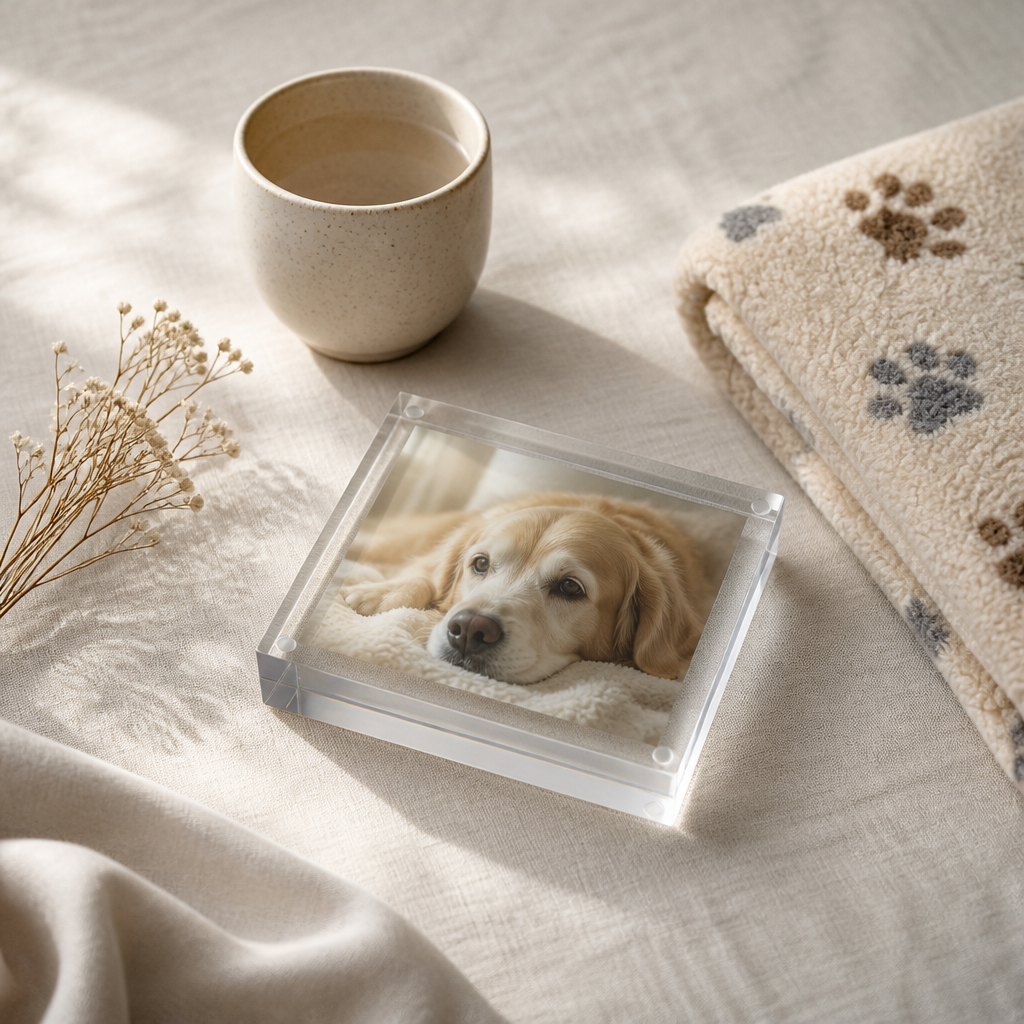
A bookshelf at eye level, a windowsill that catches morning light, or a small table near your favorite chair all work well. Think about the path you walk most often, since a memorial you pass during daily routines becomes a gentle presence rather than an occasional reminder. Avoid ledges where a busy pet or a curious child could knock it down.
Some owners prefer a quieter corner away from the main living area, and that's a valid choice too. What matters most is that the spot feels like it belongs to your pet.
Sharing It With Your Family
If other people in your home also loved your pet, consider including them in the placement decision. Children often have a strong sense of where their companion should be, and involving them can make the memorial feel shared rather than assigned. A shared ritual, like saying a favorite memory aloud on birthdays, can help everyone grieve together.
Grief often looks different from one person to the next. Some family members will want to talk about their pet often, while others may prefer quiet reflection. Making room for both can be a gift in itself.
Frequently Asked Questions
How is an acrylic pet memorial different from a standard keepsake?
An acrylic memorial stands out because of how it handles light. The clear surface lets daylight and lamp light pass through and across the piece, so it seems to change throughout the day. Many owners find that quality makes it feel more like a living presence than a static object.
Does acrylic scratch easily?
Acrylic is durable for display, but it can scratch more easily than glass. Clean it with a soft cloth and mild soap, lift it rather than sliding it, and keep it away from abrasive cleaners. With those habits, most pieces stay clear for years.
Can I use an older or slightly faded photo of my pet?
Yes, but it helps to check the image first. Try to choose the sharpest version you have, and if the photo is faded, consider a light edit to restore contrast before printing. If you're unsure, bring the original image and ask the team which version will print most clearly.
How soon should I order a memorial after my pet dies?
There's no required timeline. Some people want something in their hands right away, while others need several weeks or months before they feel ready. You can start with a photo or a few notes and take your time with the rest.
What if I can't decide on the inscription?
Start with the name and the dates, which are always appropriate. Then add one line about something your pet loved, like a favorite toy, a nap spot, or a familiar greeting. You can always set the draft aside and come back to it later.
We'd love to hear how you've kept your pet's memory close, so please share your experience or any questions you have about choosing a memorial.
References
- Complete guide to pet memorial ideas and tributes
- Article on how pet memorials offer comfort and healing after loss