

Children and Pet Loss: Help Kids Grieve and Heal
When your family pet dies, your whole household grieves, and that includes the smallest members. But children and pet loss is a pairing that often catches parents off guard. You're managing your own heartbreak while trying to find the right words for a child who may be experiencing death for the very first time. It's a lot to carry. The good news is that you don't have to have all the answers. You just have to show up, be honest, and walk through it together. This guide will help you do exactly that, step by gentle step.
Table of Contents
- Quick Takeaways
- Why Pet Loss Hits Kids So Hard
- How Grief Looks at Different Ages
- How to Break the News with Honesty and Care
- Helping Kids Cope Day by Day
- Creating a Lasting Tribute Together
- Comparing Tribute Approaches for Families with Children
- When to Seek Extra Support
- Frequently Asked Questions
- References
Quick Takeaways
| Key Insight | Explanation |
|---|---|
| Pet loss is often a child's first experience with death | This makes it a formative moment, not "just a pet." Give it the weight it deserves, because your child certainly does. |
| Use honest, clear language | Say "died" and "death" rather than "went to sleep" or "went away." Euphemisms create confusion and distrust in young, literal thinkers. |
| Grief looks different at every age | Toddlers may keep asking where the pet went. School-age kids may swing between sadness and play. Teens may seem withdrawn. All of this is normal. |
| Creative expression is a genuine grief tool | Drawing, journaling, and making memory crafts help children process emotions they can't yet put into words. |
| Involve kids in memorial rituals | Giving children an active role, whether reading a poem, placing a flower, or choosing a keepsake, lets them feel heard and part of the healing. |
| A tangible keepsake extends comfort beyond the ceremony | Physical memorials like a custom blanket or personalized pillow give children something to hold onto on hard days, long after the loss. |
| Maintain routines and keep communication open | Consistent daily rhythms and the freedom to ask questions help children feel safe when everything else feels uncertain. |
Why Pet Loss Hits Kids So Hard
It might seem surprising, but losing a pet can hit a child harder than losing a distant relative. The daily bond between a child and their pet is woven into the fabric of everyday life. That pet was there for morning cuddles, after-school playtime, and quiet bedtime moments. When that presence disappears, the absence is felt everywhere.
Grief experts and child psychologists consistently note that a pet's death is frequently a child's very first encounter with death, which means it carries enormous weight. It's not just grief over an animal. It's a child's first reckoning with the fact that love doesn't prevent loss. That's profound territory for a young heart.
Because the bond is so deep and so daily, don't be surprised if your child's grief feels disproportionate to others around them. Well-meaning friends or relatives who don't have pets may not fully understand. You may need to gently remind them that this loss is real, and that your child deserves the same compassion and patience they would give any grieving person.
"Grieving over the loss of a pet, particularly for a child, is similar to grieving over a person. For kids, losing a pet who offered love and companionship can be much harder than losing a distant relative."
How Grief Looks at Different Ages
One of the most reassuring things to know is that children's grief is developmentally shaped. What your four-year-old needs is very different from what your twelve-year-old needs, and both are different from a teenager's experience. Understanding this helps you respond to your child rather than react to a behavior that might feel confusing.

Toddlers and Very Young Children (Under 5)
Very young children don't yet grasp the permanence of death. They may repeatedly ask when the pet is coming back, even days or weeks after the loss. They might also worry that the pet will wake up underground. This isn't denial. It's simply where they are developmentally, and it's completely normal. The best response is to keep your answers simple, patient, and consistent. Reassure them that they are safe and loved. Keeping daily routines steady is especially helpful for this age group, because familiarity provides a sense of security when the world feels strange.
School-Age Children (6 to 12)
Children in this range are actively learning that death is permanent and universal. They may ask detailed questions about what happens to the body, or where their pet "goes." They might also seem fine one day and then tearful and confused the next. This on-and-off grief pattern is completely healthy, not a sign that something is wrong. School-age kids may also express sadness through anger or behavioral changes, which can feel alarming. Give them space, but keep the door open. Let them know that whatever they're feeling is allowed here.
Teenagers
Teens tend to have a fuller understanding of death, but that doesn't make it easier. They may internalize their grief or feel embarrassed about crying over a pet in front of peers. They might also experience a re-visiting of older losses. Check in gently, without pressure. Journaling, creating art, and having private rituals can be especially meaningful for this age group.
Pro tip: Children may grieve the same loss again at later developmental stages as their understanding deepens. If your child brings up the pet months or years later with fresh sadness, that's a healthy sign, not a setback. Follow their lead and open the conversation warmly.
How to Break the News with Honesty and Care
Telling your child that their pet has died is one of the harder conversations you'll have as a parent. Planning it a little in advance, even just a few minutes, makes a real difference. Here are some things that genuinely help.
Choose the Right Setting
Have the conversation one-on-one, somewhere your child feels comfortable and safe. Familiar surroundings offer quiet support when the news is hard. Avoid telling them in front of a crowd or somewhere they can't react freely. You want them to feel held by the space, not watched.
Use Clear, Honest Language
This is the most important thing you can do. Use the words "died" and "death" directly, rather than softer phrases like "went to sleep," "passed on," or "went to a better place." Young children are concrete, literal thinkers. Telling them the pet "went to sleep" can create real fear around bedtime. Saying a pet "ran away" may make a child wonder why the pet didn't love them enough to stay. Honest language, even when it's harder to say, is kinder in the long run.
Answer Questions Simply and Truthfully
Your child will likely have questions, and some of them will be very specific. "Where did the body go?" "Did it hurt?" "Will you die too?" Answer each one as honestly and gently as you can, using age-appropriate language. It's completely fine to say, "I don't know for sure," when you don't. What matters is that your child feels safe asking and heard in their wondering.
Pro tip: If you learned that your pet was terminally ill before the death, share that information with your child as soon as possible. Giving them time to say goodbye is one of the most meaningful gifts you can offer, and research shows that preparing children ahead of time helps them cope better with the loss when it comes.
Helping Kids Cope Day by Day
The day of the loss is only the beginning. The days and weeks that follow are where helping kids cope with pet death really unfolds. Here's what works in practice.
Keep Talking About the Pet
Perhaps most importantly, keep your pet's name and memory present in conversation. Share funny stories, bring up a favorite memory at dinner, smile when you talk about something silly the pet used to do. Let your child see that it's okay to love someone who is gone, and that talking about them is an act of love, not an act of sadness.
Validate Every Feeling
Your child may feel sad, angry, guilty, relieved, or all of those things in the same afternoon. None of these feelings are wrong. Children need to hear that directly. When a child feels understood, grief becomes something they move through rather than something they bury. The research is clear that acknowledging children's emotions is one of the most important things a parent can do during this time.
Support Creative Expression
Children often express what they can't say in words through drawing, painting, writing, or play. Encourage these outlets without directing them too much. Let your child draw the pet however they want, write a letter they'll never send, or make up a story about where their pet went. These are not "just crafts." They are emotional processing in action, and they genuinely help.
Maintain Routines
When a beloved pet disappears from daily life, the routine changes too. There's no morning walk, no feeding time, no evening cuddle. Maintaining other routines, mealtimes, bedtimes, weekend rhythms, helps children feel that the world is still predictable and safe. Stability is a form of comfort that children feel in their bodies before they can understand it in their minds.

Creating a Lasting Tribute Together
One of the most healing things you can do with a grieving child is create something together. A shared memorial activity gives children an active role in honoring their pet, which helps them feel that their love matters and that their relationship with the pet continues to have meaning. Pet loss for kids doesn't have to be purely about sadness. It can also be about celebration, remembrance, and love made visible.
Hold a Simple Memorial Ceremony
A ceremony doesn't need to be elaborate. It can be a few quiet minutes in the backyard, at a favorite spot, or simply gathered around the kitchen table. Let your child help plan it. They might want to share a favorite memory, place flowers, light a candle, or read a poem they wrote themselves. Giving children an active role in the ceremony is meaningful, not a distraction. Their instinct to include a beloved toy or recall a private nickname is the heart of the tribute.
Create a Memory Jar Together
A memory jar is one of the simplest activities you can do, and yet it carries real weight. Write down happy moments on small slips of paper and fold them into a jar. Happy memories from walks, funny habits, cozy naps together. The jar lives somewhere visible, and on hard days your child can reach in and pull out a memory to hold.
Make a Photo Memory Book or Scrapbook
Gather photographs, your child's drawings, and small mementos like a tag or a favorite toy. Arrange them together with captions or little notes written to the pet. Making a memory book is a project you can work on over several days, which means it gives your child something to return to, a gentle and purposeful way to process grief across time.
Plant a Living Memorial
Planting a tree, a flower, or a small garden in the pet's honor gives children something that grows over the years. Watching something bloom in a pet's name is quietly powerful. It creates a living, changing reminder that love doesn't disappear, it just changes form.
Choose a Tangible Keepsake to Keep
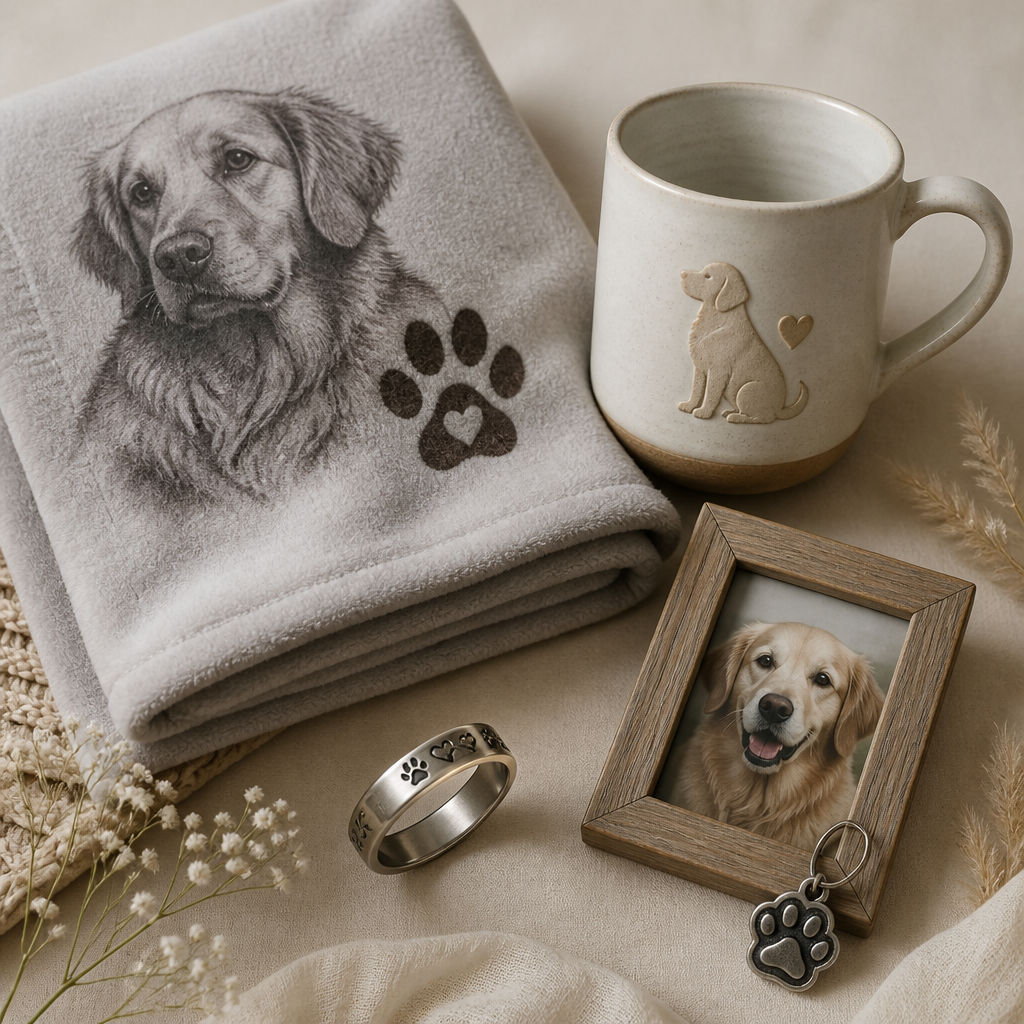
Beyond the activities, many families find deep comfort in a physical memorial that stays with them, something a child can touch on a hard day long after the ceremony is over. At The Soul Keep, you'll find personalized pet memorial items designed for exactly this kind of lasting comfort. A custom woven blanket printed with your pet's photo becomes a source of warmth that a child can wrap themselves in. A personalized pillow can sit on a child's bed, a gentle presence that tells them the memory is safe. These aren't generic novelties. They are crafted with care, meant to hold the weight of a real and irreplaceable bond. Choosing one together with your child, letting them be part of picking the photo or the words, makes the keepsake even more meaningful.
Comparing Tribute Approaches for Families with Children
When it comes to honoring a pet alongside children, not all approaches feel equally right for every family. Here's a look at three common options to help you choose what fits your situation.
| Tribute Approach | Best For | What Children Get Out of It |
|---|---|---|
| Home memorial ceremony with rituals | Families who want a personal, low-pressure way to say goodbye together | An active role in honoring the pet, emotional validation, shared family memory |
| DIY craft projects (memory jar, scrapbook, painted stones) | Children who express themselves through making and doing, especially younger kids | Creative outlet for grief, a tangible product they created themselves, sense of accomplishment |
| Personalized keepsake (custom blanket, pillow, acrylic memorial) | Families who want comfort that lasts beyond the initial grieving period | A physical object to hold and return to on sad days, a reminder that the love is permanent |
In practice, the most healing approach is often a combination of all three. Start with the ceremony to give the grief a clear moment of recognition. Add a craft project to keep hands and hearts busy in the days after. Then choose a lasting keepsake together so your child has something enduring to hold.
When to Seek Extra Support
Most children will move through pet loss with time, open conversation, and the tools described here. But sometimes grief needs a little more support, and there's no shame in that. Watch for signs that your child might benefit from speaking with a grief counselor or child therapist.
If your child's grief is significantly disrupting sleep, school, eating, or friendships for more than a few weeks, if they seem to be withdrawing or shutting down, or if they express feelings of guilt they can't shake, it may be time to reach out for professional guidance. A therapist who works with children and grief can offer tools and language that go beyond what a parent can provide alone. That's not a failure on your part. It's just knowing when to bring in extra care.
It's also worth remembering that grief in children can be cyclical. They may grieve the loss multiple times through different developmental stages as their understanding of death deepens. A fresh wave of sadness years later isn't a crisis. It's growth. Be ready to revisit the conversation with warmth whenever your child brings it back.
Frequently Asked Questions
Is it okay to let my child see their pet after it has died?
Yes, if your child wants to, it can actually be helpful. Seeing the pet helps some children accept the reality of the loss rather than imagine something more frightening. Follow your child's lead. If they want to see or say goodbye, allow it. If they're unsure or say no, respect that fully. There is no single right answer, only what feels right for your child.
What should I say if my child asks why the pet had to die?
Keep your answer honest and age-appropriate. For younger children, something simple like "their body stopped working and couldn't get better" is clear without being frightening. For older children, you can explain more about illness, age, or the circumstances of the death. Avoid elaborate stories that might later feel like a betrayal of trust. Children trust you more when you're honest, even about hard things.
My child seems fine one minute and crying the next. Should I be worried?
No, this is completely normal and actually very characteristic of how children grieve. Unlike adults, who often stay inside their grief for extended periods, children tend to dip in and out. You might see them in tears one moment and asking to go play the next. This isn't a sign that they don't care. It's simply how children process, and it's healthy. Give them space to feel it when it comes and to step away when they need to.
Should I get a new pet right away to help my child feel better?
Generally, it's wise to wait. Rushing into a new pet can send the message that the one who died is replaceable, which can actually deepen a child's grief rather than ease it. Give your child time to mourn and remember. When the family feels ready, and when it feels like an addition rather than a substitution, welcoming a new animal friend can be a beautiful part of healing. Let your child be part of that conversation too.
How do I explain euthanasia to a child?
Be honest and simple. You might say something like: "When a pet is in a lot of pain and the vet can't help them feel better, a special medicine can help their heart stop gently so they don't suffer anymore. It's very different from sleeping, and it doesn't hurt them." Avoid using the phrase "put to sleep," as this can cause real fear around bedtime for younger children. Being clear and calm helps your child trust both you and the process.
How can I help my child feel connected to their pet long after the loss?
Keeping the pet's memory present in daily life is one of the most lasting gifts you can give. Talk about the pet by name. Share memories at the dinner table. Make a memory book together. Choose a personalized keepsake, like a custom blanket or a pillow from a place like The Soul Keep, that your child can keep in their room as a gentle, daily reminder that the love they shared is permanent and real. Memory doesn't require a pet to still be here. It just requires care to keep it alive.
We'd love to hear from you: how did your family create a tribute together after losing a beloved pet, and what helped your children the most?
References
- UCLA Health: six practical tips for handling pet loss with children, including how to deliver the news with honesty and care
- Children's Mercy: guidance on how children experience pet death and ways adults can support them through the grief process
- Purdue University Veterinary Teaching Hospital: how children grieve pet loss across different developmental stages from infancy through adolescence
- KidsHealth: parent-focused advice on supporting a child through the death of a family pet, including when and how to talk about getting a new animal
- Funeral.com: simple memorial crafts and rituals to help children honor and remember a pet after loss