

Losing an Elderly Pet: Grieve & Celebrate a Long Life
There is a particular kind of grief that comes with losing an elderly pet. It is layered, tender, and full of contradictions. You knew this day was coming. You watched the gray creep in around their muzzle, counted the steps that took them longer to climb, noticed the naps growing deeper and longer. And yet, when the moment finally arrives, it still takes your breath away. You are not overreacting. You are not alone. Loving an animal for a decade or more weaves them into the very fabric of your daily life, and grief for them deserves the same gentleness and space you would give any other profound loss.
Table of Contents
- What Makes Senior Pet Loss Different
- Recognizing Anticipatory Grief Before the Loss
- Signs Your Elderly Pet Is Nearing the End of Life
- Preparing to Say Goodbye: Practical and Emotional Steps
- Navigating Grief After the Loss
- Celebrating a Long Life Well Lived
- Comparing Ways to Honor Your Pet's Memory
- Frequently Asked Questions
- References
What Makes Senior Pet Loss Different
People sometimes assume that because you "had so many good years," the loss of an older pet should be easier to bear. That assumption misses something important. The longer you have shared your life with an animal, the deeper the roots of that bond go. Senior pet death grief carries its own specific weight that younger-pet loss does not always hold.
Your elderly companion was not just a pet. They were a constant. They were there through job changes, moves, breakups, and quiet Tuesday evenings when nothing else felt stable. Their absence does not just leave an empty bed or a bowl that goes unfilled. It leaves a silence that fills every corner of your home.
It is also worth naming something else: with a senior pet, grief often begins before the loss itself. The months or even years of watching your companion slow down, of managing their medications and vet visits, of loving them through decline, take an emotional toll that many people do not fully recognize until the loss is complete. That toll is real, and it matters.

Recognizing Anticipatory Grief Before the Loss
If your pet is aging or has received a difficult diagnosis, you may already be carrying grief that has no name yet. That sadness you feel before the actual loss is called anticipatory grief, and it is one of the most overlooked parts of the senior pet loss experience.
Anticipatory grief can look like anxiety about the future, a heightened awareness of each moment you share, or even a strange distance as your heart tries to protect itself from the pain it knows is coming. All of these responses are normal. They are not signs that you are giving up on your pet or loving them less. They are signs that you love them very much.
How to Move Through Anticipatory Grief
One of the most healing things you can do during this time is to be fully present. Spoil your companion a little. Take them to their favorite spot in the yard, even slowly. Let them have that extra treat. Take photos, not because you are preparing a eulogy, but because you want to hold these moments close. Creating new memories, even small ones, gives grief something beautiful to hold onto.
Talk to someone who understands, whether that is a trusted friend, a pet loss support group, or a mental health professional. Pet bereavement is a real and recognized form of loss, and you do not have to carry it in silence.
Pro tip: Keep a small journal during your pet's final season. Write down the moments that make you smile, the funny habits, the way they greet you. This record becomes one of the most precious things you will have after they are gone, far more personal than any photograph alone.
Signs Your Elderly Pet Is Nearing the End of Life
Knowing when a senior pet is declining can feel impossibly hard. You want to be realistic without giving up hope too soon. Understanding the signs your companion may be nearing the end of their life helps you make thoughtful, loving decisions, rather than being caught off guard.
Physical Signs to Watch For
Common signs in elderly dogs and cats include increased difficulty moving, a loss of interest in food or water, labored or irregular breathing, confusion or disorientation, incontinence, and a general withdrawal from things they used to love. You may also notice that they are having more bad days than good ones, struggling to rest comfortably, or no longer responding to you in the ways they used to.
No single sign tells the full story. It is the pattern over time that matters, and your vet is your most important partner in reading that pattern. Veterinary hospice services exist specifically to help families navigate this stage with compassion and clarity, and a quality-of-life conversation with your veterinarian can give you a framework when your emotions make it hard to see clearly.
The "Good Days vs. Bad Days" Measure
One of the most practical and humane ways to assess your pet's quality of life is simply to count. When bad days begin to outnumber good ones consistently, it is often a sign that your pet is struggling in ways that love alone cannot fix. Your vet can walk you through more structured quality-of-life tools if you find that helpful.
Pro tip: Keep a simple daily log with a quick note: good day, okay day, or hard day. Patterns become clearer over weeks, and this record can be enormously helpful when discussing end-of-life options with your veterinarian.
Preparing to Say Goodbye: Practical and Emotional Steps
When you know the end is approaching, there are practical steps you can take that will ease the process, both for your companion and for yourself. Preparing to say goodbye to an old pet is not a betrayal. It is one of the most loving things you can do.
Conversations to Have Before the Day Comes
Talk with your vet about what end-of-life care looks like for your specific pet. Ask about pain management, palliative options, and what signs would indicate that it is time to act. Understanding your options ahead of time means you will not have to make decisions in the middle of acute crisis, when grief makes everything harder.
If euthanasia is likely, ask about in-home services. Many families find that allowing their pet to pass in familiar surroundings, in their favorite spot, reduces the distress for everyone involved.
Creating a Final Memory Together
Before you reach the final day, think about how you want to spend some of this time. A slow walk in a beloved place. A photo session at home. A gathering of the people who love your pet. These small, intentional moments become the memories you carry forward, and they deserve to be made on purpose.
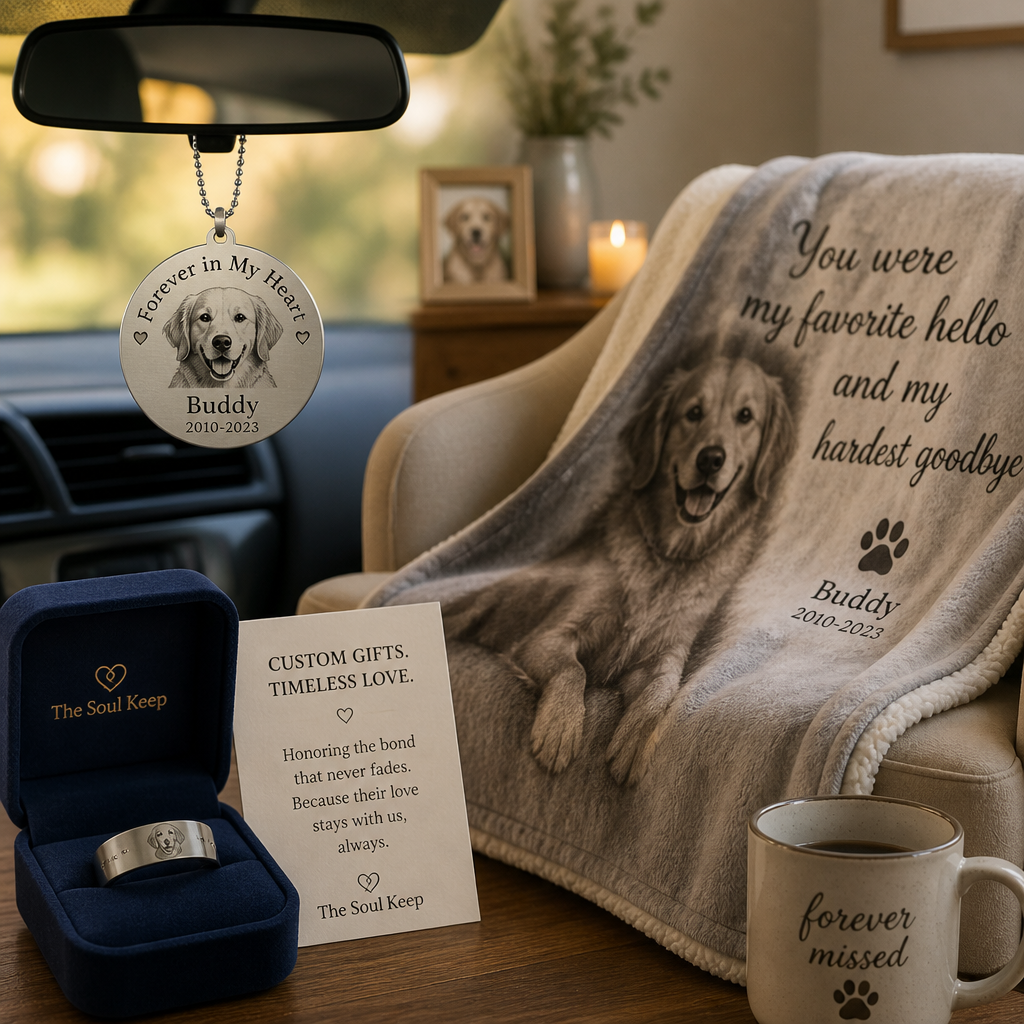
This is also a good time to think about how you want to memorialize your companion. Choosing a meaningful keepsake, a personalized blanket woven with their photo, an engraved ring that keeps them close, or a custom piece that lives in your home, gives grief a place to land that is full of love rather than emptiness. At The Soul Keep, each piece is created to hold the specific memory of your pet, not a generic tribute but something that belongs entirely to your bond.
Navigating Grief After the Loss
The day after is often the hardest. The house is quiet in a new way. You reach for the leash out of habit. You find a toy under the sofa and have to sit down for a moment. Senior pet death grief is not a single wave but a long tide that comes in and out, sometimes gently and sometimes with surprising force.
What Normal Grief Actually Looks Like
Grief after losing a long-lived pet can include sadness, anger, guilt, numbness, and relief, sometimes all in the same afternoon. The relief especially can feel confusing or shameful, but it is not. If your pet suffered, your relief that their suffering has ended is an act of love, not a failure of it. Grief does not move through neat stages on a schedule. It moves at its own pace, and that pace is always the right one for you.
Finding Support That Actually Helps
Not everyone in your life will understand the depth of what you are feeling. Some people may say things like "it was just a pet" or "you can always get another one," and those words, however well-intentioned, can sting. Seek out the people who do understand, whether that means a pet loss support group, an online community of fellow animal lovers, or a grief counselor who takes pet loss seriously. You deserve support that matches the size of your loss.
Meaningful rituals can also help. Writing a letter to your pet. Planting something in their honor. Setting up a small memory space in your home with their photo and a favorite item. Creating a physical anchor for your grief gives it somewhere to go other than the hollow feeling in your chest.
The love we give our animals does not end when they do. It lives on in every habit we formed, every corner of our home they claimed, and every way they changed us. Grief is just love with nowhere to go yet. Give it somewhere beautiful.
Celebrating a Long Life Well Lived
There is something worth naming here that gets lost in the pain: your elderly pet lived a full life. They knew love, warmth, play, and belonging. They grew old in a home where they were cared for. That is not something to mourn. That is something to celebrate.
Shifting From Grief to Gratitude Without Rushing
Celebrating a long life does not mean pushing your grief aside before it is ready to move. It means making room for both at once. You can be devastated by their absence and deeply grateful for every year you shared. Both are true. Both belong.
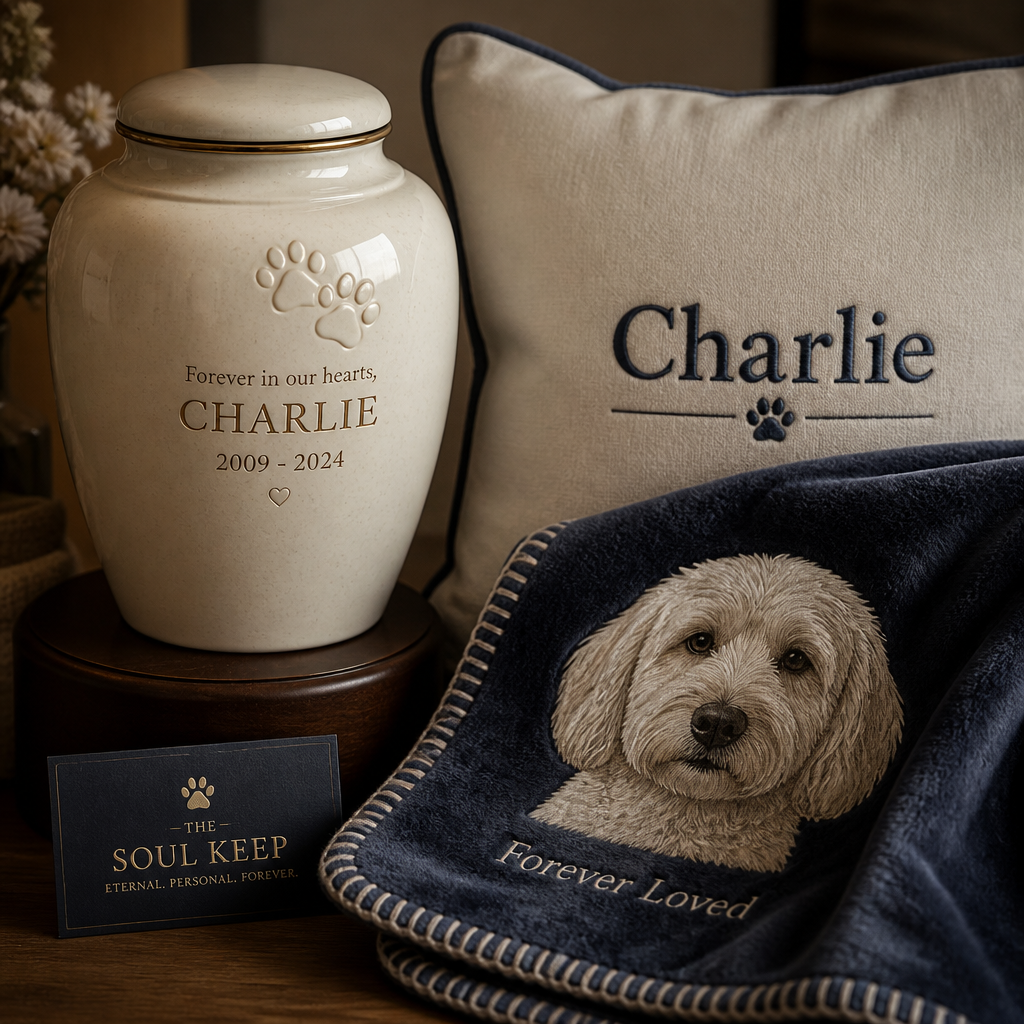
One way to hold both is to create a tribute that tells their story. A custom memorial piece, something personalized with their name, their image, and the years of their life, does not just mark their death. It marks their life. It says: this animal was here, they mattered, and we loved them well.
Tangible Ways to Honor Your Pet's Legacy
There are many ways to keep a beloved companion's memory alive in your daily life. A personalized woven blanket with their photo gives you something to hold on hard nights. An engraved ring lets you carry them with you everywhere. A custom ceramic mug means they are part of your morning ritual. A memorial pillow in their favorite spot keeps the space from feeling only empty.
These are not just objects. They are anchors. They hold a specific memory, a particular bond, a life that was singular and irreplaceable. The Soul Keep's collection of personalized memorial pieces is built on this understanding: every tribute should feel as unique as the animal it honors.
Pro tip: If you are not ready to choose a memorial piece in the immediate aftermath of loss, that is completely fine. Give yourself a few weeks. When you are ready, choosing something that feels personal rather than generic will bring more lasting comfort.
Comparing Ways to Honor Your Pet's Memory
There is no single right way to memorialize a beloved companion. Different approaches serve different needs, and many people find comfort in combining more than one. Here is a gentle overview of three meaningful paths.
| Approach | What It Involves | Best For |
|---|---|---|
| Personalized Keepsakes | Custom items like engraved jewelry, woven photo blankets, memorial pillows, or personalized mugs made with your pet's image and name | Daily comfort, keeping your pet close, creating a lasting physical tribute that feels intimate and personal |
| Living Memorials | Planting a tree or garden in your pet's honor, donating to an animal shelter or rescue in their name, fostering animals as a tribute | Those who find comfort in growth and giving, or who want to extend their pet's impact into the world |
| Memory Rituals | Creating a memory box with photos, written tributes, and favorite items; holding a small gathering to share stories; journaling about your pet regularly | Processing grief actively, sharing the loss with others who loved your pet, and building a narrative that honors a full life |
In practice, a keepsake and a living memorial together offer something that neither does alone: one keeps your pet physically close, while the other sends their love outward into the world. Many families find this combination deeply healing.
Frequently Asked Questions
Is it normal to grieve an elderly pet as deeply as a human loss?
Yes, completely. The depth of your grief reflects the depth of your bond, not the species of the one you lost. For many people, a pet they have shared a decade or more with has been one of their most consistent and unconditional relationships. That kind of love, when it ends, deserves real grief. Do not let anyone minimize what you are feeling.
How long does grief after losing an elderly pet usually last?
There is no standard timeline, and anyone who gives you one is not being honest with you. Some people feel the sharpest pain lift within a few weeks. Others carry a quiet ache for months or longer, especially after very long relationships with senior pets. Grief moves at its own pace, and the goal is not to finish it quickly but to move through it in a way that feels true to your love for your companion.
What is anticipatory grief, and why does it happen with senior pets?
Anticipatory grief is the sadness and emotional weight you feel before an actual loss, during the period when you know a loss is coming. With elderly pets, this can begin months or even years before they pass, as you watch them slow down and manage their aging. It is a completely normal response to loving someone whose time is limited. The grief you feel before the loss counts, and it deserves the same care and attention as the grief that follows.
How do I talk to my children about the death of our elderly family pet?
Honest, gentle language tends to work best with children. Avoid euphemisms like "went to sleep" that can create confusion or fear. Name the loss clearly but softly, and invite your child to share their own feelings without pressure. Creating a small ritual together, like placing a photo in a special spot or planting a flower, helps children have something tangible to do with their grief. Letting them be part of honoring the pet models healthy mourning and gives them agency in the process.
When is it appropriate to get another pet after losing an elderly companion?
There is no correct answer here, and you should be wary of anyone who gives you a firm timeline. Some people find that welcoming a new animal helps them heal by channeling their love and routine back into a living relationship. Others need months or longer before they feel ready. Neither path is wrong. The only thing worth avoiding is using a new pet to skip over grief rather than move through it. A new companion deserves to be welcomed on their own terms, not as a replacement.
What are the most meaningful ways to memorialize an elderly pet?
The most meaningful memorials are the ones that feel specific to your pet, not generic. A personalized keepsake made with their photo, name, and the years of their life holds something a mass-produced item never can. Beyond physical tributes, written records of their story, small rituals like lighting a candle on their birthday, or donating to a cause they would have loved (like a local shelter) are all deeply meaningful. The goal is to give their memory a place in your ongoing life, not just in your sadness.
Is it okay to feel relieved after an elderly pet passes?
Yes. Relief is one of the least-discussed and most universal parts of saying goodbye to an elderly pet who has been suffering or declining. If your companion struggled at the end of their life, your relief that their pain is over is an expression of love. It does not mean you loved them less or that you are glad they are gone. It means you cared more about their comfort than your own desire to hold on. Relief and grief can coexist, and both are honest.
Have you lost a senior pet, or are you walking that tender road right now? We would love to hear how you are honoring their memory, share your experience in the comments below.
References
- Understanding and coping with anticipatory grief before pet loss
- A compassionate guide to coping with the loss of a pet
- Actionable ways to navigate the pet loss grief process
- How to recognize end-of-life signs and decide how to say goodbye
- The stages of grief after losing a pet and how to move through them