

The Role of Ritual in Pet Grief: Why Ceremonies Matter
Losing a pet can leave a hole in your day that's hard to explain to anyone who hasn't lived with one. The dog who met you at the door, the cat who claimed your lap every morning, they're suddenly gone, and the house feels far too quiet. Many people wonder whether they're overreacting or what they should even do next. That's where pet grief ritual comes in. A simple, intentional ceremony can give your sorrow a shape, a place to land, and a way to say goodbye that feels true to the bond you shared.
Table of Contents
- Quick Takeaways
- Why Pet Grief Needs Its Own Ritual
- What Ritual Does for Grieving Owners
- Rituals for the Days Before Goodbye
- Simple Rituals You Can Do at Home
- Comparing Common Ritual Approaches
- Helping Children and Surviving Pets Grieve
- Returning to Ritual as Healing Unfolds
- Frequently Asked Questions
- References
Quick Takeaways
| Key Insight | Explanation |
|---|---|
| Ritual gives grief a clear shape | A set time, a chosen place, and a few honest words tell your heart that this loss matters and is being honored. |
| You can start before the final day | Anticipatory grief is real. A small goodbye while your pet is still with you can make the weight easier to carry later. |
| Keep it small and personal | A candle, a shared story, or a walk on your pet's usual route can carry as much meaning as any formal service. |
| Invite people who knew your pet | Sharing memories with family or friends who loved your companion reduces isolation and often brings new stories to light. |
| Give children a real role | Simple circles of sharing let kids say goodbye in their own words and learn that grief and healing can exist side by side. |
| Consider waiting before a new pet | Many experts suggest mourning your companion fully before bringing home another animal, so the new arrival isn't carrying the weight of a replacement. |
Why Pet Grief Needs Its Own Ritual
When a pet dies, many people are surprised by how hard it hits. You might be fighting back tears in the grocery store, or reaching for a leash that no longer has a dog on the other end. Those reactions aren't signs that you're being dramatic. They're signs that a real bond has been broken.
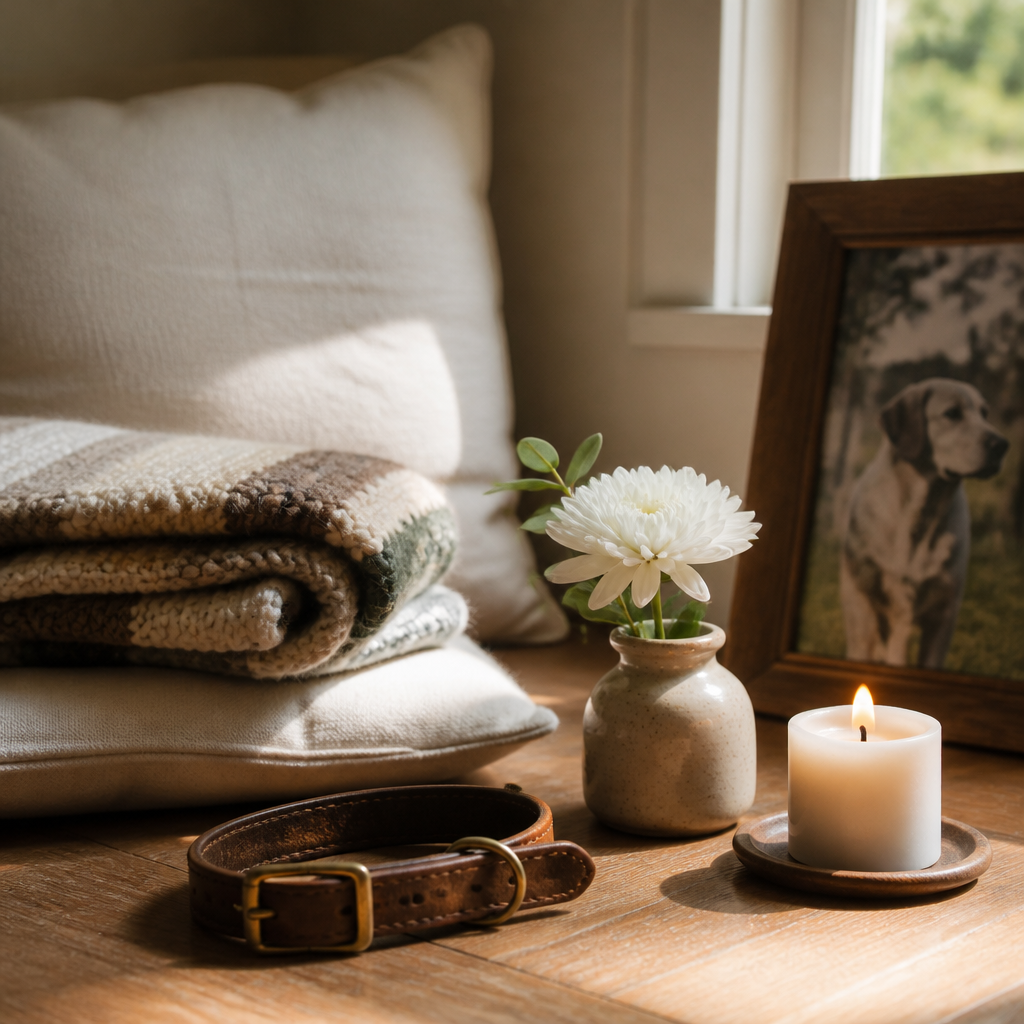
Here's the tricky part. Human loss comes with well-worn customs, like services, shared meals, and days set aside for remembering. Pet loss often comes with none of that. Many owners are left to figure out on their own how to mark the end of a life that filled their home for years. That gap is exactly why a deliberate ritual can help so much.
Some ritual writers point out that many traditional mourning practices were built for people, not animals. That's worth honoring rather than fighting. You don't need to copy a funeral to give your pet a meaningful goodbye. You can build something that fits the relationship you actually had, whether your companion was a rescued greyhound, a chatty parrot, or a quiet cat who sat on your keyboard every afternoon.
In practice, the families who handle pet loss best are usually the ones who decide in advance what they want the goodbye to look like. They don't wait to see how they feel. A little planning gives you something to lean on when the house is silent and the usual routines feel wrong.
Think of ritual as a bridge between the life that was and the life you're learning to live now. It doesn't erase the loss. It gives the loss a place to rest, and that can make all the difference on the hardest mornings.
What Ritual Does for Grieving Owners
Naming the loss out loud
One of the most useful things a ritual does is say, clearly and on purpose, that this death matters. Grief can feel private and a little embarrassing, especially when someone says "it was just a dog." A ritual gives you a dedicated moment to acknowledge the loss and to say what your companion meant to you.
Many owners find that speaking their pet's name, sharing a favorite memory, and saying goodbye in their own words is enough. You don't need a script. You need a few quiet minutes where your grief has permission to exist.
Giving big feelings a container
Grief after a pet's death often arrives in waves. One hour you're fine, and the next you're angry at yourself, guilty about a decision, or sad over something tiny, like the bowl still sitting by the back door. Rituals act as a container for those feelings. Writing a letter, lighting a candle, or walking the route you took together gives that wave somewhere to go.
A ritual does not have to be big to be meaningful. It only has to be honest about the love it is marking.
Reconnecting with others who loved your pet
Sharing a ritual with people who knew your pet can ease the loneliness that so many owners feel. A neighbor who waved at your dog every morning, or a sibling who spent weekends with your cat, may be grieving too. Gathering together lets everyone's memories land in one place, and you may hear stories you never knew.
Pro tip: Ask each person to bring one memory of your pet to the gathering. Hearing someone else's favorite story can be surprisingly comforting, even when your own heart is still tender.
Rituals for the Days Before Goodbye
Why anticipatory grief deserves attention
Not every loss arrives without warning. Many pet owners walk through a long illness or a hard decision about euthanasia, and grief starts well before the last day. This is often called anticipatory grief, and it can be exhausting in its own way. You may already be mourning the afternoons you won't get back.
The good news is that you don't have to wait until after your pet dies to begin a ritual. Small, intentional moments in the weeks or days before can help you cherish what's left and make the eventual goodbye feel less rushed.
Simple goodbye rituals while your pet is still here
Choose one or two things your companion loved most and build your time around them. That could mean a slow walk to the park they always wanted to visit, a favorite treat on the porch, or an afternoon of gentle brushing and quiet company. Take a few photos for your own keeping, if that feels right.
Some owners also write a short letter to their pet, saying thank you and naming what they'll miss most. You can read it aloud, tuck it into a memory box, or keep it private. There's no wrong choice here.
If euthanasia is part of the plan, consider deciding ahead of time who will be present and what you'd like to have with you, such as a favorite blanket or a special collar. Having these details settled can take some pressure off the final visit, so you can focus on being with your friend.
Pro tip: Set a small goal for your pet's last good week, like one favorite place or one favorite meal. Small plans give your heart something steady to hold onto when everything else feels uncertain.
Simple Rituals You Can Do at Home
Creating a resting place with a stone marker
Many people choose to bury their pet at home, and marking the spot with a stone or boulder can make the place feel cared for. Some owners plant a tree or a few flowers nearby, creating a living memorial that changes with the seasons. Before you dig, check local rules about pet burial on private property, since requirements vary by location.
If burial isn't possible, a stone can still be placed in a garden bed, on a windowsill, or somewhere you pass often. The point is to give your pet a place you can visit, both in person and in your thoughts.
Lighting a candle and writing a memory
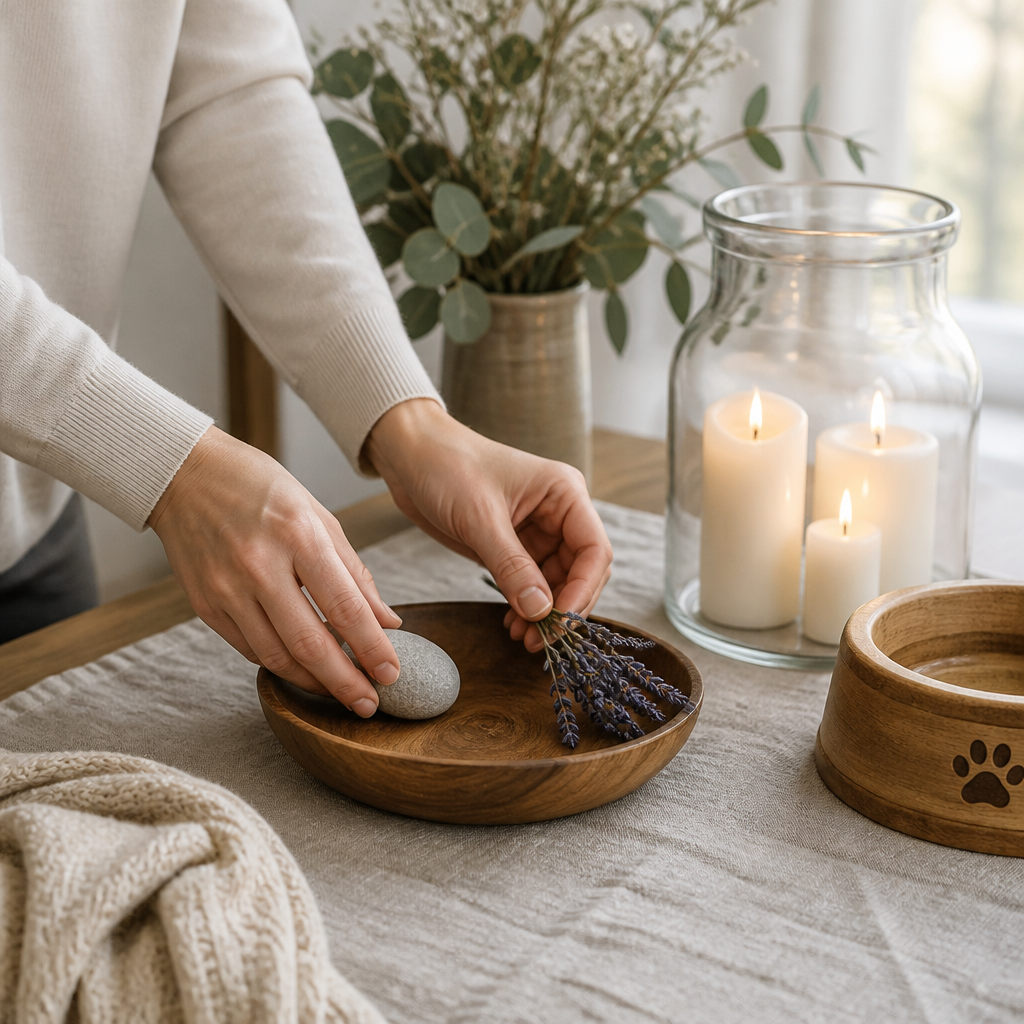
A candle lit in your pet's memory and allowed to burn down can mark a clear beginning and end to your private time. Set aside a quiet evening, light it, and say what you miss most. Let it burn as long as it needs to, then blow it out when you feel ready.
Writing is another gentle option. A poem or short essay about what your pet meant to you can be shared with family or kept in a drawer. Many people find that writing slows their thoughts down enough to notice what they're really feeling.
Keeping a memory box
A memory box is one of the easiest rituals to start. Fill it with a collar, a favorite toy, a few photos, or an ID tag. Some owners add a handwritten note or a keepsake from a memorial collection. Open it when you need to remember, or leave it closed until you're ready.
Comparing Common Ritual Approaches
Not every ritual suits every family. Some people want something quiet and private, while others need to share the goodbye with a group. Here's how three common approaches compare, so you can choose the one that fits your situation.
| Ritual Approach | Best For | What to Watch For |
|---|---|---|
| Backyard burial with a stone marker | Owners who want a physical place to visit and tend | Confirm local rules on burial first, and pick a spot you'll be able to reach comfortably. |
| Memory box and keepsakes | Owners who like to gather mementos slowly over time | Don't rush to fill it. Some people add items for months, and that's perfectly fine. |
| Shared gathering and circle of stories | Families and friends who knew your pet well | Invite people who will respect your pace, and let everyone speak or stay silent as they wish. |
In practice, I'd suggest starting with the smallest option that feels true. A common mistake is trying to plan a big ceremony while you're still in shock, which often leaves people feeling more pressure instead of more peace. Pick the simple version first. You can always add to it later.
If you want something you can hold, a woven blanket or an acrylic memorial piece can fit neatly into a memory box or sit at the center of a small gathering. Let the object support the ritual rather than define it.
Helping Children and Surviving Pets Grieve
Giving young children a voice in the ritual
Children often feel loss in very direct ways. Ritualwell.org shares a story about a two-year-old who announced that a nursery school hamster had died, and a five-year-old who thought everyone should stand in a circle, hold hands, and say what they loved about him. That simple idea is hard to beat. Children can say goodbye with words, drawings, or a small object.
One source for families with young children notes that losing a pet can help prepare a child for other losses, since they learn that all things come to an end and that a person can both grieve and heal. Keep explanations honest and simple, and let them ask questions as often as they like.
Honoring other pets in the home
Your surviving animals may notice the change too. Some owners see a companion pet wander to a favorite spot, wait by the door, or eat more slowly at mealtime. Keep their routines steady, and include them in a gentle moment if they seem interested, like a short walk past the place where you marked your pet's rest.
Think carefully about timing for a new pet. Many experts suggest waiting until you've fully mourned your companion before bringing another animal home. That isn't a strict rule, but it can keep a new arrival from feeling like a replacement and gives you room to grieve.
Returning to Ritual as Healing Unfolds
Marking anniversaries and special days
Grief tends to return on birthdays, holidays, and the anniversary of a death. You may be surprised how much a day you didn't plan for can knock you flat. A small annual ritual can give those days a gentle structure, such as lighting a candle, making your pet's favorite treat, or visiting the spot where you laid them to rest.

You can also weave ritual into everyday life. Some people keep a short daily habit, like saying good morning to a photo or walking the same route they once took with their companion. A routine keeps the day running, while a ritual gives the day meaning.
Knowing when to ask for more support
Some grief softens with time. Some stays heavy for months and starts to interfere with sleep, work, or relationships. If that sounds like you, it's a good moment to reach out. Pet loss support groups, both in person and online, give you a space where people understand exactly why a companion animal can matter so much.
Several organizations publish free pet loss resource pages, including lists of support groups, books, and coping tools. A good starting point is to look for a local humane society or animal shelter that offers grief support. You don't have to be in crisis to ask for help, and you don't have to figure this out alone.
Pro tip: Keep a simple list of three things your pet taught you, and reread it on hard days. It's a small ritual that can shift your focus from absence to the love that remains.
Frequently Asked Questions
What is a pet grief ritual?
A pet grief ritual is any intentional action that marks your companion's life and death, such as lighting a candle, writing a letter, or sharing stories with friends. It doesn't need a formal setting or a set script. What matters is that it feels honest and gives you a clear moment to say goodbye.
When is the right time to hold a ritual?
There isn't one right moment. Some people want a goodbye before their pet passes, while others prefer to wait a few days or weeks. If you aren't ready yet, you can start small later on. Ritual can happen whenever you need it.
Do I need a formal pet loss ceremony?
No. Many owners find a quiet candle, a shared photo, or a walk to a favorite spot more meaningful than a formal service. A gathering can be lovely if friends want to come together, but a simple ritual is just as valid.
How can I help a child take part in a pet loss ritual?
Invite them to share one thing they loved about the pet, draw a picture, or choose a special spot for a stone. Answer their questions honestly and simply, and let them grieve in their own way. Many children find comfort in having a job to do.
How long should I wait before getting a new pet?
Many experts suggest waiting until you've fully mourned your pet before bringing home another animal. There's no fixed timeline. Notice how you feel when you imagine a new companion, and give yourself permission to take the time you need.
Is it normal to feel relief after a pet's suffering ends?
Yes, it's very common. Relief can sit right beside sadness and guilt, especially after a long illness. Feeling relief doesn't mean you loved your pet any less. Many people find it helps to name all of these feelings within their ritual.
We'd love to hear from you: what ritual helped you say goodbye to your companion, or what are you still hoping to find?
References
- Jewish ritual guide on grieving the loss of a pet, with home ritual ideas
- Guide to powerful pet loss rituals for before, during, and after a pet dies
- Resource list for coping with pet loss, including support groups and books
- Colorado pet loss and grief support resource center